Decentralized Tech and the Future of Indie Creators
20 August 2026
The internet was supposed to be the great equalizer for creators. A writer in a small town could reach readers in Tokyo. A musician in a bedroom could find fans in Berlin. And for a while, it worked. But somewhere along the way, the platforms that made this possible started taking more than they gave. They decide what you see, what you earn, and whether your account survives a random algorithm change.
Now there is a different path forming. Decentralized technology, the same underlying ideas that power cryptocurrencies and blockchain networks, is being repurposed for creative work. It promises something radical: ownership without a middleman, payment without a 30 percent cut, and a direct relationship between creator and audience. But it is not a magic wand. It comes with real trade-offs, technical hurdles, and a learning curve that can feel brutal.
This article is not a hype piece. It is a practical look at what decentralized tech actually offers indie creators, where it falls short, and how you can decide if it is worth your time.
What Does Decentralization Actually Mean for a Creator?
When most people hear "decentralized," they think of blockchain and crypto. That is part of it, but the concept is broader. A decentralized system is one where no single company or server controls the flow of content and money. Instead of uploading your video to YouTube's servers and hoping their policies stay favorable, you publish to a network that is spread across many computers. Nobody owns the network in the traditional sense. No single entity can pull the plug on your account.For a creator, this changes the power dynamic. Right now, your income depends on platform policies. A demonetization flag on YouTube, a shadowban on Instagram, or a sudden change in Spotify's royalty structure can wipe out months of work. Decentralized platforms aim to remove that risk. Once you publish content to a blockchain or a peer-to-peer network, it is there. It cannot be deleted by a corporate executive. Payments can be sent directly from fans to you without an intermediary taking a cut.
But there is a catch. Decentralized systems are often slower, more complicated, and less polished than their centralized counterparts. You are trading convenience for control. That trade is worth making for some, but not for everyone.
The Real Problem with Traditional Platforms
Let us be honest about why creators are looking elsewhere. The current model is not broken for the platforms. It is broken for you.Consider how a typical platform works. You create content. The platform hosts it, promotes it, and handles payments. In exchange, they keep a significant portion of revenue. On ad-based platforms, you get a share of ad revenue, but the platform decides which ads run, how much they pay, and whether your content is "brand safe." On subscription platforms like Patreon, you pay a fee for every transaction. On streaming services, the payout per stream is so low that you need millions of plays to make a living wage.
Worse, the platform controls the relationship with your audience. You do not have their email addresses. You do not have a direct line to them. If the platform changes its algorithm, your audience may never see your new work. If the platform decides to ban you, you lose everything overnight.
This is not a hypothetical. Creators have been deplatformed for political reasons, for accidental copyright strikes, and for no reason at all. The appeals process is often automated and opaque. You are not a customer of these platforms. You are a supplier, and suppliers are replaceable.
How Blockchain Changes the Payment Game
The most immediate and practical use of decentralized tech for creators is payments. Cryptocurrencies like Bitcoin and Ethereum allow anyone to send money anywhere in the world without a bank or payment processor. For a creator with an international audience, this is a game changer.Think about the friction of getting paid as an indie creator. You might have fans in Brazil, India, and Germany. Each country has its own payment systems, currency conversion fees, and banking regulations. Platforms like PayPal take a cut on every transaction and often freeze accounts if they look suspicious. Banks charge wire fees. Currency conversion eats into your earnings.
With crypto, a fan in any country can send you a payment in seconds. The fee is often a fraction of a cent, regardless of the amount. You can hold the funds in a wallet and convert to your local currency when the timing is right. This is not theoretical. Many creators already use this model, and the infrastructure has matured significantly over the past few years.
However, there are downsides. Crypto prices are volatile. If you receive a payment in Bitcoin and the price drops 20 percent the next day, you have lost money. Stablecoins, which are pegged to the US dollar, solve this problem. But they introduce their own risks, such as reliance on the company that issues the stablecoin. You also need to handle your own security. If you lose your wallet's private key, your money is gone forever. There is no customer support line to call.
NFTs: Beyond the Hype
Non-fungible tokens, or NFTs, got a terrible reputation during the 2021 boom. Most of the projects were speculative junk. People were paying millions for cartoon apes that had no utility and no lasting value. The market crashed, and a lot of people lost money. But the underlying technology has real uses for creators, if you strip away the hype.An NFT is simply a certificate of ownership for a digital item. It lives on a blockchain, which means it is verifiable and cannot be duplicated. For a creator, this opens up new ways to sell work.
Imagine you are a digital artist. You can sell a piece as an NFT. The buyer owns a verifiable copy, and you can program the NFT to pay you a royalty every time it is resold. This is a huge shift from the traditional art market, where artists rarely see a penny from resales. The same logic applies to music, writing, and even fan communities.
But there are serious considerations. First, the environmental impact of some blockchains is real, though newer networks have solved this with proof-of-stake consensus. Second, the market for NFTs is still young and volatile. You might not be able to sell your work at all. Third, most NFT platforms are not user-friendly for non-technical audiences. Your fans might not want to set up a crypto wallet just to buy your art.
The practical advice here is to treat NFTs as a supplementary income stream, not a primary one. Use them if they genuinely fit your work and your audience. Do not force it just because it is trendy.
Decentralized Social Media and Content Hosting
The term "Web3 social media" gets thrown around a lot, but there are working examples. Platforms like Mastodon (which runs on the ActivityPub protocol) and Lens Protocol offer alternatives to Twitter and Instagram. The key difference is that you own your profile and your followers. You can move your account to a different server without losing your audience. The network is not owned by a single corporation.For content hosting, protocols like IPFS (InterPlanetary File System) allow you to store files across a distributed network. Instead of your video living on YouTube's servers, it lives on many computers around the world. As long as at least one node has the file, it is accessible. This makes censorship nearly impossible.
There is a real appeal here for creators who produce controversial content or who work in regions with strict internet controls. But the user experience is not there yet. Decentralized social networks have smaller audiences. You will not reach the same number of people as you would on a mainstream platform. The interfaces are clunkier. Video streaming can be slow because files are being pulled from multiple sources. And there is no algorithm to help you get discovered. You have to bring your own audience.
This is the fundamental tension. Decentralized platforms give you freedom, but they do not give you reach. For an indie creator, reach is often the most valuable thing. If you are just starting out, you may be better off using centralized platforms to build an audience and then migrating to decentralized tools once you have a loyal following.
The Role of DAOs in Creative Funding
Decentralized Autonomous Organizations, or DAOs, are another piece of the puzzle. A DAO is a group of people who pool money and make decisions together through voting. There is no CEO or board of directors. The rules are written in smart contracts on a blockchain.For creators, DAOs can serve as a funding source. Instead of waiting for a record label or a publisher to take a chance on you, you can pitch your project to a DAO. If the members vote to fund you, you receive the money and deliver the work. The community becomes your patron, and you stay independent.
This model has already been used for documentary films, music albums, and journalism projects. It is not a replacement for traditional grants or crowdfunding, but it offers a different dynamic. The community has a stake in your success, which can translate into promotion and support beyond just money.
The downside is that DAOs can be chaotic. Voting processes are slow. Communities can be divided over what to fund. And the legal status of DAOs is still unclear in many jurisdictions. If you receive funding from a DAO, you may have tax implications that are not straightforward. Do your homework before committing to this path.
Common Mistakes Creators Make with Decentralized Tech
It is easy to get excited about the possibilities and jump in without a plan. That is how people lose money and time. Here are the most common mistakes I see.The first mistake is treating crypto as a get-rich-quick scheme. If you are a creator, your job is to create. Speculating on token prices is a distraction and a risk. Use crypto for payments and ownership, not as a side hustle.
The second mistake is ignoring the user experience for your audience. Just because you understand how to set up a wallet does not mean your fans do. If buying your work requires three steps and a security lecture, people will not bother. Make it as easy as possible. Use platforms that handle the technical complexity for your audience, even if you sacrifice some decentralization.
The third mistake is abandoning centralized platforms entirely. The reality is that most of your audience still lives on YouTube, Instagram, and TikTok. You can use decentralized tools for payments, ownership, and backup, but you should not cut off your main distribution channels. A hybrid approach is more practical.
The fourth mistake is ignoring the legal and tax implications. Crypto transactions are taxable events in most countries. If you sell an NFT, you may owe capital gains tax. If you receive payment in crypto, you need to track its value at the time of receipt. This is not something you can ignore. Consult a professional who understands digital assets.
When Decentralized Tech Is Not the Answer
There are situations where decentralized tech is genuinely the wrong tool. If you are a creator who relies on editorial curation and platform promotion, you need the algorithms. A new musician on Spotify gets discovered through playlists. A new writer on Medium gets discovered through the platform's recommendation engine. Decentralized networks do not have these features yet.If you create content that requires high-bandwidth streaming, like 4K video or interactive games, current decentralized hosting is not good enough. The latency and bandwidth costs are prohibitive. You are better off using a centralized service and accepting the trade-offs.
If your audience is not technically inclined, do not force them to learn about wallets and private keys. You will lose them. The technology should serve your audience, not the other way around.
And if you are just trying to make a quick buck, stay away. The decentralized space is full of scams, rug pulls, and vaporware. It rewards people who build genuine value over time, not those who chase trends.
Practical Steps to Get Started
If you are intrigued but not sure where to begin, start small. You do not need to go all in.First, set up a crypto wallet. There are user-friendly options like MetaMask for Ethereum and its compatible networks. This is your gateway to payments and NFTs. Keep your seed phrase safe. Write it down on paper and store it somewhere secure. Do not take a screenshot or save it in a cloud service.
Second, consider accepting crypto payments for your work. You can add a wallet address to your website or use a payment processor like Coinbase Commerce or NowPayments. Offer a small discount for customers who pay in crypto. This will give you experience with the process without a huge commitment.
Third, experiment with a single NFT project. Create a limited edition of your work and mint it on a low-fee network like Polygon or Solana. Price it reasonably. Use this as a learning experience. See how the process works, how the marketplace functions, and whether anyone is interested. Do not expect to get rich. The goal is to understand the mechanics.
Fourth, join a few creator-focused DAOs or communities. Observe how they operate before asking for funding. Look at the projects they have funded and the outcomes. This will give you a sense of whether the model fits your work.
Finally, keep your centralized platforms running. The goal is not to replace everything at once. It is to add new tools that give you more control and more income streams. Treat decentralized tech as a hedge against the whims of big platforms, not as a replacement for them.
The Future Is Hybrid
The most realistic future for indie creators is not a complete migration to decentralized networks. It is a hybrid model. You use centralized platforms for distribution and discovery because that is where the audiences are. You use decentralized tools for ownership, payments, and community building because that is where the control is.Imagine a musician who releases their music on Spotify for discovery, but also sells limited edition albums as NFTs with exclusive bonus tracks. They take donations in crypto directly from fans. They run a membership community on a decentralized platform where they own the member list. They are not beholden to any single company.
This is not a fantasy. It is happening right now, and the infrastructure is getting better every year. The question is not whether decentralized tech will change the creator economy. It already is. The question is whether you will adapt early enough to benefit.
Final Thoughts
Decentralized tech is not a silver bullet. It does not magically make you successful, and it does not eliminate the hard work of creating and promoting your art. What it does do is shift the balance of power. It gives you ownership over your work, direct access to your audience, and a fairer share of the revenue.But it also demands more from you. You have to learn new tools, manage your own security, and navigate unclear legal territory. That is not for everyone. And that is okay.
The best approach is to be pragmatic. Use what works for your specific situation. Keep an open mind, but do not be naive. Test small, learn fast, and always keep your options open. The platform economy gave indie creators a voice. Decentralized tech can give them independence. The future belongs to those who can hold both.
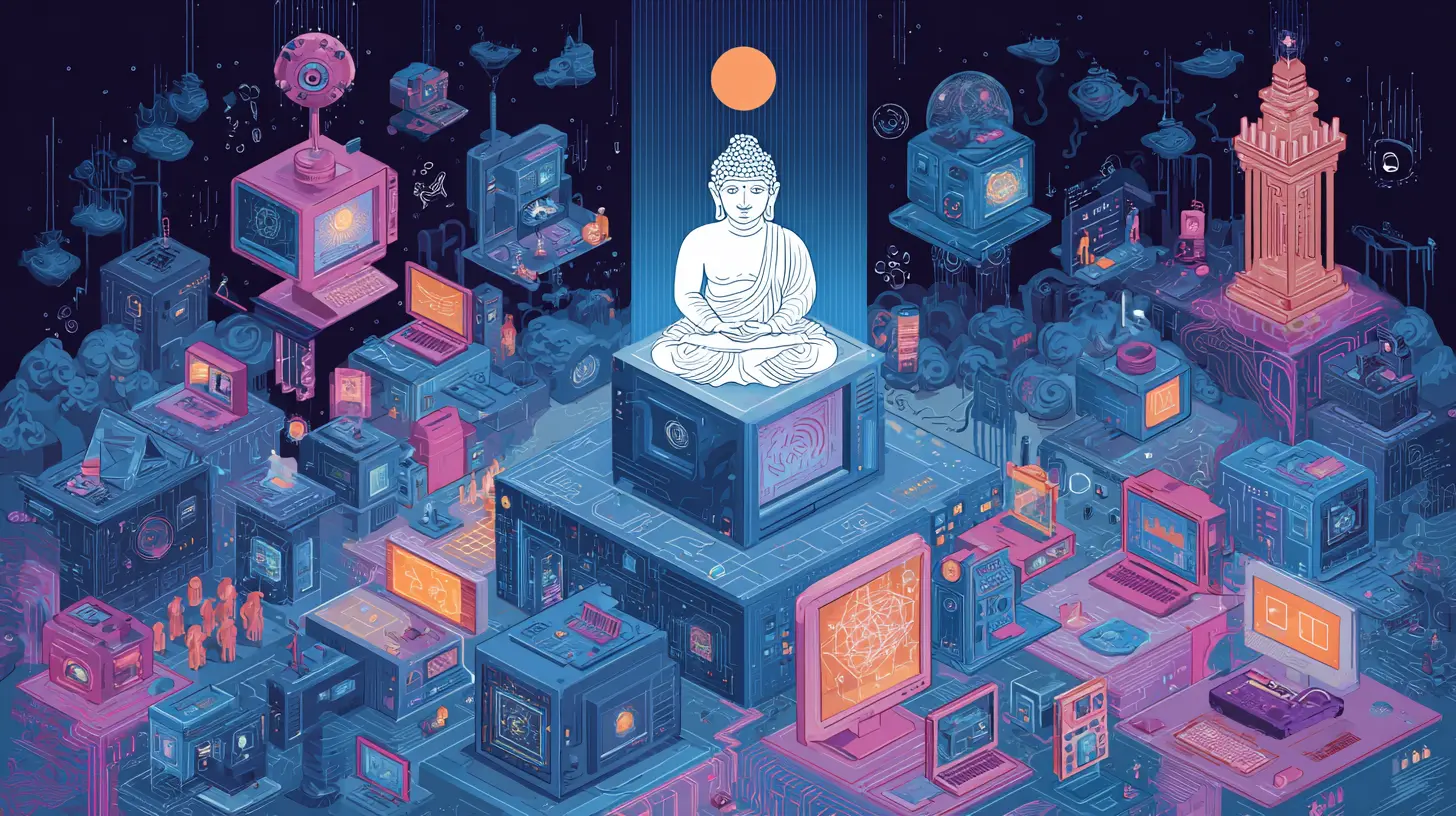
all images in this post were generated using AI tools
Category:
Tech For CreatorsAuthor:
Adeline Taylor
Discussion
rate this article
1 comments
Natasha White
Decentralized tech is a game changer for indie creators. It empowers them to reclaim control, connect directly with audiences, and redefine their success. No middlemen needed.
August 22, 2026 at 4:12 AM
Adeline Taylor
Absolutely, decentralized tech opens up incredible possibilities for indie creators. It allows them to build genuine connections and shape their own paths without intermediaries. Exciting times ahead!