Deep Learning in Space Exploration: The Next Frontier by 2027
9 May 2026
Let me paint you a picture. You are sitting in a control room, but there is no joystick, no pilot, no human in the loop at all. A spacecraft the size of a minivan is hurtling toward a moon of Jupiter, and it is making real-time decisions about where to land, what to sample, and how to avoid a jagged cliff edge. It does not ask for permission. It does not wait for a signal that takes forty minutes to arrive. It just acts. That is not science fiction. That is where deep learning is taking space exploration, and by 2027, the whole game changes.
We have been sending robots into space for decades, but let us be honest: most of them have been dumb as rocks. They follow pre-programmed instructions, they take pictures, they beam data back to Earth, and then some poor grad student spends six months labeling craters by hand. That model is broken. The universe is too big, too weird, and too far away for us to babysit every probe. Deep learning flips the script. Instead of telling a spacecraft what to see, we teach it how to see. Instead of uploading a map, we let it build one in real time. And by 2027, this approach will be the difference between a mission that discovers life and a mission that crashes into a rock.
Why Space Needs Deep Learning Right Now
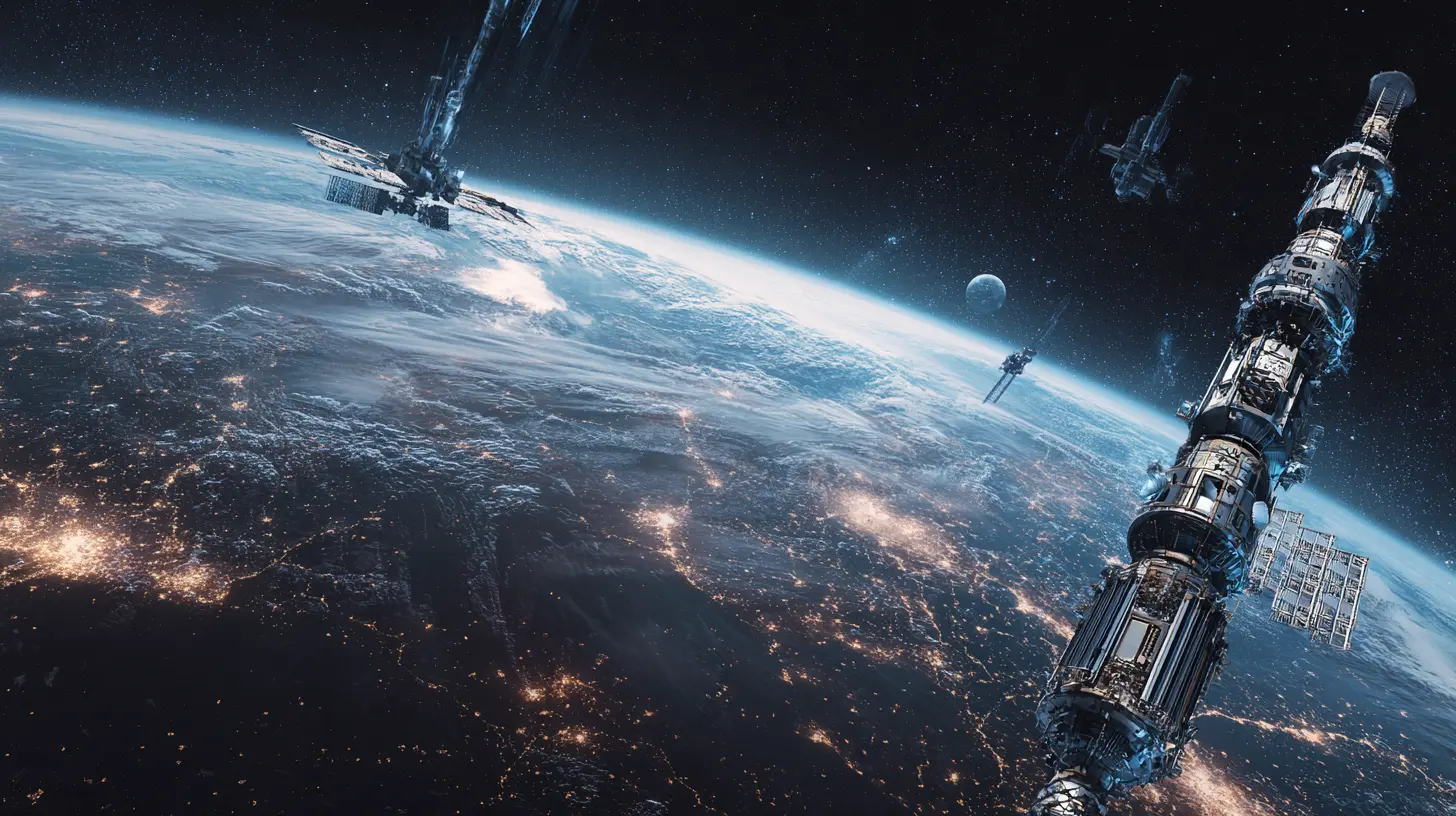
Here is the hard truth: we are terrible at exploring space the old way. Every Mars rover we have ever sent moves at a glacial pace because it has to stop, look around, radio home, and wait for instructions. That works fine for a parking lot, but it is a disaster for a planet with shifting dunes, hidden crevices, and dust storms that can swallow a robot whole. Deep learning changes that by giving the rover a brain. Not a simple if-this-then-that brain, but a neural network that can look at a rock and say, "That looks like sedimentary layering, probably safe to drive over," or "That shadow hides a drop-off, back up."Think of it like this. Imagine you are driving a car in a foreign country where you do not speak the language, you have no map, and your GPS is delayed by twenty minutes. That is how every current Mars rover operates. Now imagine you have a co-pilot who has seen a million roads, a million obstacles, and a million signs. That co-pilot can tell you, "Turn left, there is a pothole ahead," without ever looking at a manual. That is deep learning in space. And by 2027, we will not just be using it for rovers. We will use it for orbiters, landers, and even crewed missions.
The 2027 Timeline: What Is Actually Realistic
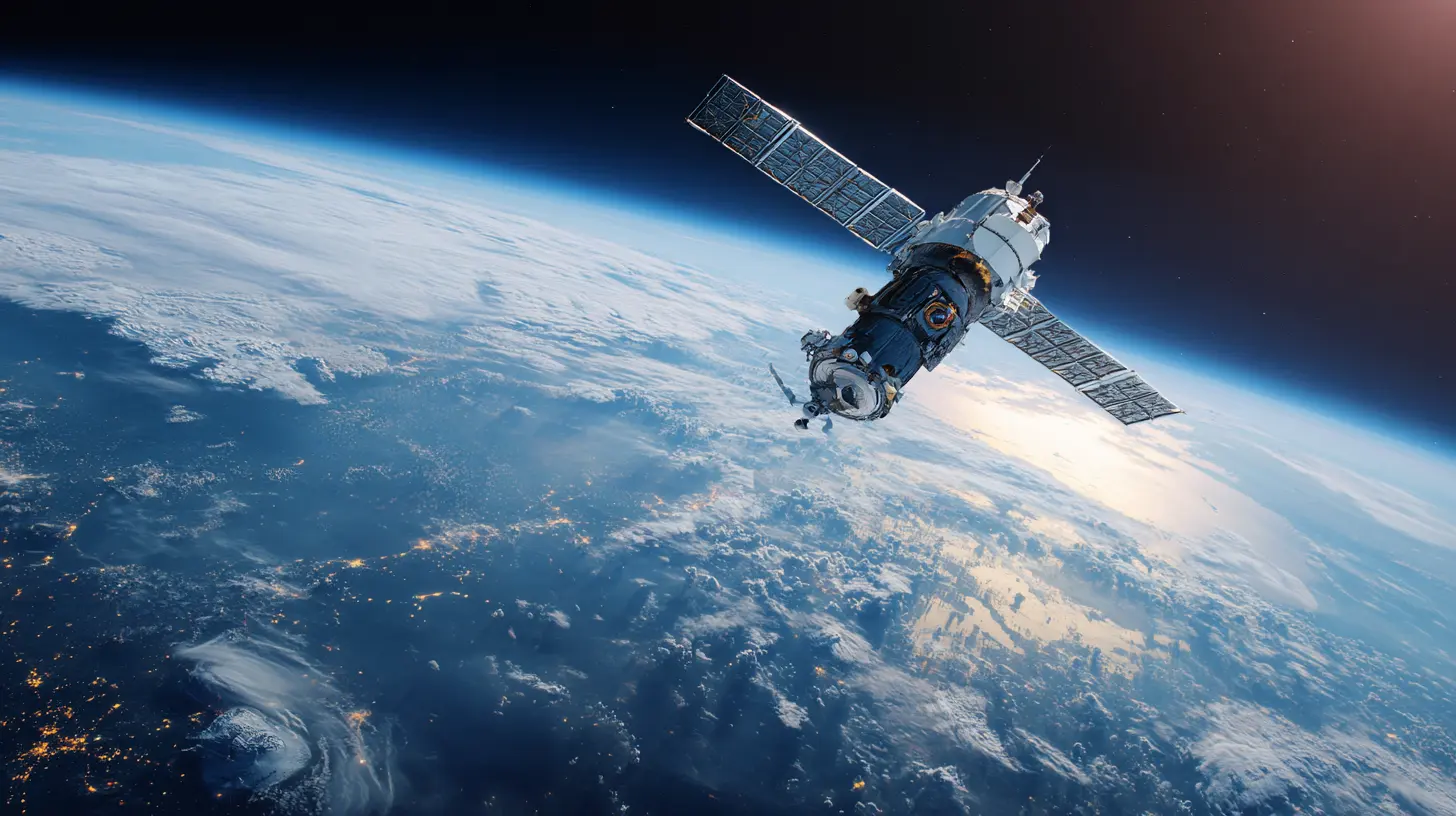
I am not going to promise you warp drive or AI that builds a space elevator. Let us get grounded. By 2027, we will see deep learning integrated into three critical areas of space exploration: autonomous navigation, scientific data analysis, and anomaly detection. These are not pie-in-the-sky concepts. NASA, ESA, and private companies like SpaceX and Blue Origin are already funding this work. The pieces are in place. The only question is how fast the algorithms can catch up to the hardware.For autonomous navigation, the goal is simple: a spacecraft that can land on an asteroid or a moon without any human input. We have already seen this work in a limited way with the Perseverance rover's terrain-relative navigation system. It used cameras and a pre-loaded map to pick a safe landing spot on Mars. But that was a one-time trick. By 2027, deep learning will allow continuous navigation. The spacecraft will watch the ground flow beneath it, recognize hazards, and adjust its trajectory on the fly. That is the difference between a gentle touchdown and a crater.
For scientific data analysis, the bottleneck is bandwidth. A single high-resolution image from a deep space probe can take hours to transmit. We cannot send everything. So we need the spacecraft to look at its own data and decide what matters. A deep learning model trained on millions of geological features can flag a rock that looks like it might contain fossilized microbial mats. It can spot an unusual spectral signature in an atmosphere. It can say, "Hey, send this one first, the rest can wait." That is not just efficient. That is how we find evidence of life before the battery dies.
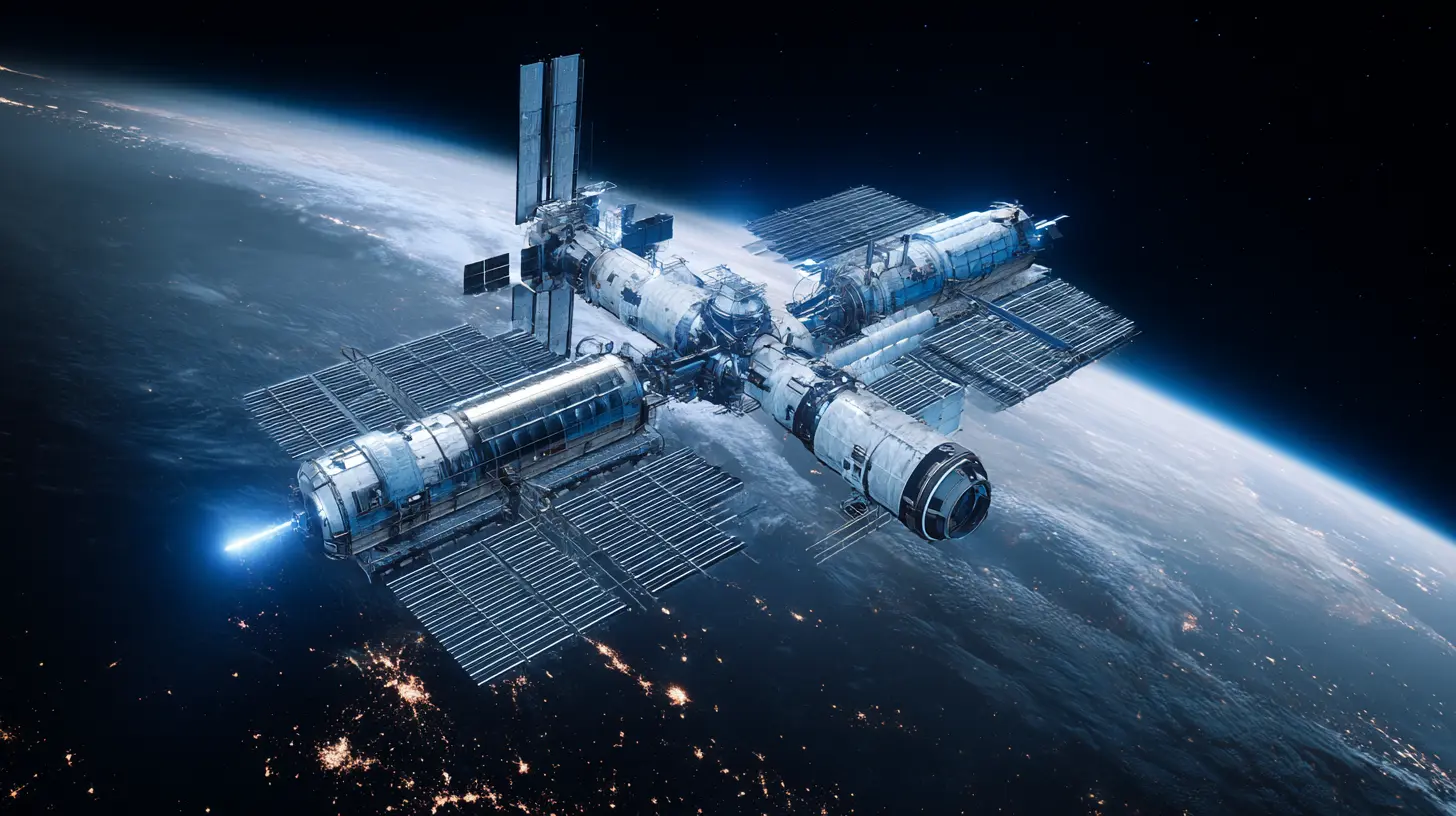
For anomaly detection, think about the Voyager probes. They have been flying for over forty years, but every time something goes wrong, engineers spend weeks diagnosing the problem. A deep learning system that monitors thousands of telemetry channels in real time could catch a failing thruster or a radiation spike before it becomes a crisis. By 2027, every major mission will have an onboard AI that acts like a doctor, not just a mechanic. It will predict failures, recommend workarounds, and keep the spacecraft healthy when no human can help.
The Real Game Changer: Onboard Learning
Here is where it gets wild. Most AI in space today is static. You train a model on Earth, freeze it, and upload it to the spacecraft. That model cannot learn new things. It is like giving a student a textbook and telling them they are not allowed to ask questions. By 2027, that will change. We will see the first generation of spacecraft that can retrain their own neural networks on the fly. They will encounter something unexpected, update their model, and get smarter over time.Why does that matter? Because space is full of surprises. We have seen hexagonal storms on Saturn, glass tunnels on the Moon, and organic molecules on comets. None of these were predicted. A static AI trained on Earth data would miss half of them. But a learning AI? It would notice the anomaly, run experiments, and adapt. That is how you turn a probe into a scientist. And by 2027, the first missions with onboard learning capabilities will be in the design phase, if not already flying.
The Data Problem: Too Much, Too Fast
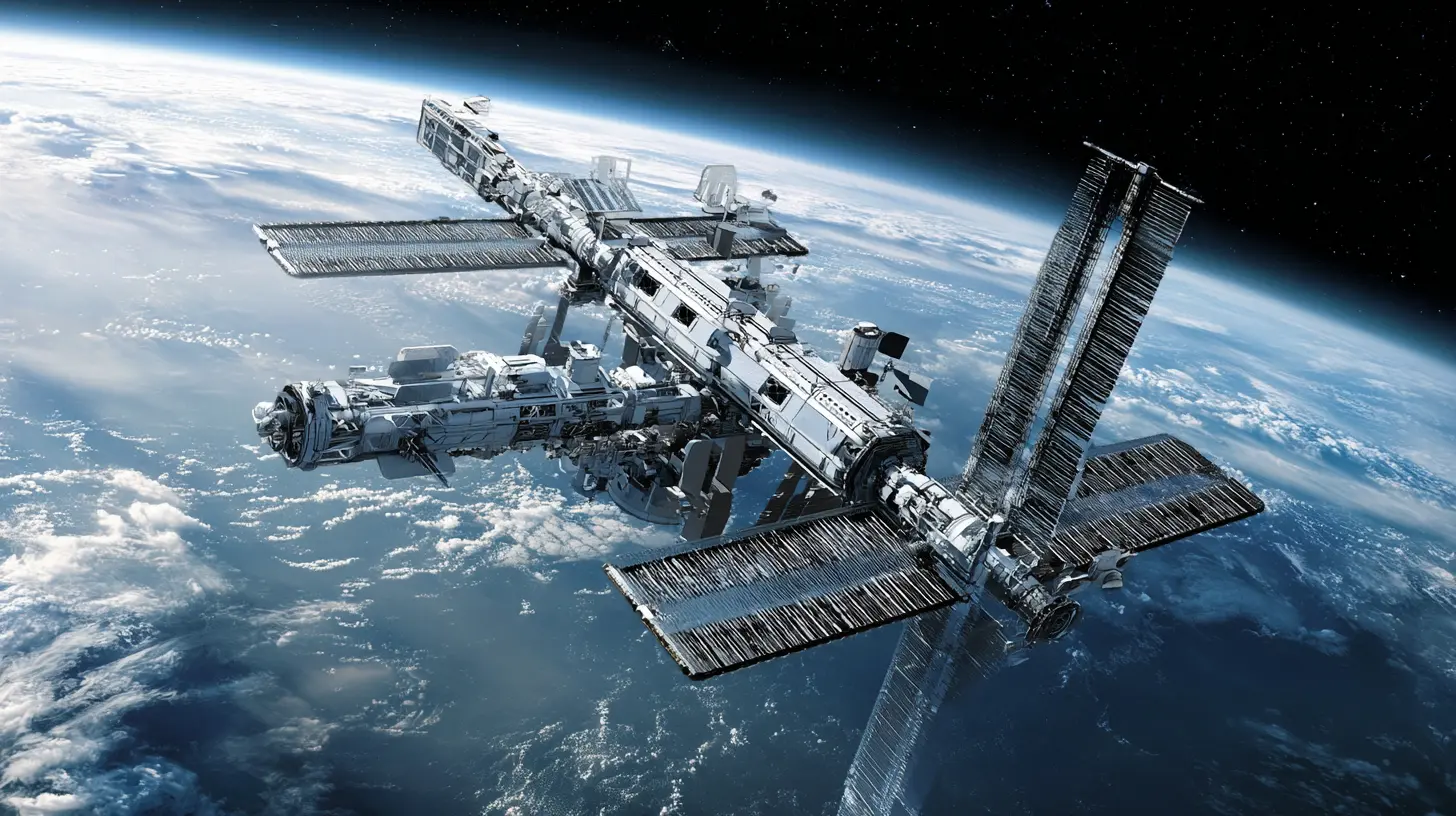
Let me throw a number at you. The James Webb Space Telescope generates about 57 gigabytes of data per day. That sounds like a lot, but it is nothing compared to what is coming. Future missions like the Europa Clipper or the Dragonfly rotorcraft on Titan will produce terabytes of data per day. We cannot beam all that back to Earth. The Deep Space Network is already overloaded. So we have to process data where it is collected.Deep learning is the only solution that scales. Instead of sending raw images, we send compressed features. Instead of transmitting every sensor reading, we send summaries and anomalies. This is not a nice-to-have. It is a necessity. By 2027, every deep space mission will have an onboard deep learning pipeline that reduces data by orders of magnitude before transmission. The human scientists on Earth will only see the highlights. The rest will be analyzed by the AI, then discarded or archived for later retrieval.
Training Models for Zero Gravity
You might think training a deep learning model for space is the same as training one for self-driving cars. It is not. Space has no gravity, no atmosphere, and extreme radiation. The hardware has to survive. More importantly, the data is completely different. A self-driving car model is trained on roads, pedestrians, and traffic lights. A space model is trained on craters, ice fields, and plasma waves. There is no massive labeled dataset for Mars craters. We have to generate synthetic data, use transfer learning from Earth analogs, and build models that generalize from tiny samples.That is the hard part. But by 2027, we will have cracked it. Researchers are already using generative adversarial networks (GANs) to create realistic images of alien terrain. They are training models on Antarctic dry valleys and underwater volcanic vents to simulate extraterrestrial environments. The result is a new breed of neural network that can look at a picture of a rock and tell you, with high confidence, whether it was formed by water, wind, or impact. That is the kind of tool that makes a mission worth billions of dollars.
The Human Element: Are We Becoming Obsolete?
I get asked this a lot. If deep learning can navigate, analyze, and decide, what is left for human astronauts? The answer is not what you think. We are not becoming obsolete. We are becoming overseers. The role of the human in space is shifting from operator to strategist. Instead of driving a rover pixel by pixel, we will tell it, "Go explore that valley and call me when you find something interesting." Instead of analyzing every spectrum by hand, we will review the AI's top picks and decide which ones deserve a second look.By 2027, the best analogy is a ship captain and a crew of expert sailors. The captain does not steer the wheel. The captain decides the destination, interprets the weather reports, and handles the unexpected. The sailors handle the day-to-day operations. Deep learning is the crew. The human is the captain. And that division of labor is exactly what we need to explore farther, faster, and safer.
The Risk: When AI Gets It Wrong
Let us not pretend deep learning is perfect. It makes mistakes. It can be fooled by adversarial examples. It can overfit to training data that does not match reality. In space, a mistake means a billion-dollar spacecraft becomes a crater. So how do we handle that? By 2027, we will see a layered approach. The AI makes recommendations, but critical decisions require verification from a secondary system. That could be a simpler physics-based model, a human in the loop for high-risk maneuvers, or a voting ensemble of multiple neural networks.We also need explainability. You cannot just trust a black box when it decides to fire a thruster. You need to know why. By 2027, explainable AI (XAI) will be a standard requirement for space missions. The model will output not just a decision, but a confidence score and a list of the most influential features. That way, engineers can audit the AI's reasoning and catch errors before they become disasters.
The Commercial Angle: SpaceX, Blue Origin, and the New Space Race
Deep learning in space is not just for government agencies. Private companies are all over this. SpaceX uses neural networks for landing their boosters. Blue Origin is developing autonomous landing systems for their lunar lander. Planet Labs uses AI to filter through millions of satellite images every day. By 2027, these capabilities will be commoditized. Any company that builds a spacecraft will have access to deep learning libraries optimized for radiation-hardened hardware.The real money, though, is in asteroid mining. If we ever want to extract resources from near-Earth asteroids, we need autonomous robots that can survey, drill, and process materials without human intervention. Deep learning is the only way to make that work at scale. By 2027, we will see the first commercial asteroid prospecting missions that rely entirely on AI to find valuable deposits. That is not a maybe. That is a when.
What About Deep Space? The Interstellar Challenge
Everything I have said so far applies to missions within our solar system. But deep learning is also the key to interstellar exploration. The Breakthrough Starshot initiative wants to send tiny probes to Alpha Centauri. Those probes will travel at 20% the speed of light. They will have no time to communicate with Earth. They must be fully autonomous. Their onboard AI will have to navigate, take measurements, and transmit data back, all without any human help.By 2027, we will not have flown an interstellar mission yet. But we will have tested the core technologies. We will have proven that deep learning can operate for decades without human intervention. We will have built models that can handle the unknown. The first interstellar probe will launch in the 2030s or 2040s, but its brain will be designed and tested in the next few years.
The Bottom Line: Why 2027 Matters
I chose 2027 for a reason. It is close enough to be realistic, but far enough that we can see the trajectory. Right now, deep learning in space is experimental. By 2027, it will be standard. Every new mission will have an onboard neural network. Every data stream will be filtered by AI. Every landing will be autonomous. The shift is not gradual. It is exponential. The first mission that uses deep learning to discover something new, something that no human would have found, will change the entire field.And that mission is coming. Maybe it is the Europa Clipper detecting plumes of water vapor. Maybe it is the Dragonfly rotorcraft finding organic compounds on Titan. Maybe it is a commercial asteroid miner hitting a platinum-rich rock. Whatever it is, deep learning will be at the center of it. By 2027, we will look back at the old way of exploring space and wonder how we ever managed without it.
So here is my challenge to you. Stop thinking of AI as a tool for chatbots and image generators. Start thinking of it as the engine that will take us to the stars. The universe is waiting. And by 2027, we will have the brains to go get it.
all images in this post were generated using AI tools
Category:
Deep LearningAuthor:

Adeline Taylor
Discussion
rate this article
2 comments
Viviana Flores
Exciting possibilities await us with deep learning in space.
June 18, 2026 at 3:37 AM
Adeline Taylor
Absolutely! The integration of deep learning in space exploration is set to revolutionize our missions and discoveries by 2027. Exciting times ahead!
Geneva Barron
This article presents a fascinating look at deep learning's potential in space exploration. Embracing these advancements could fundamentally change how we understand and explore the cosmos.
May 9, 2026 at 3:47 AM
Adeline Taylor
I'm glad you found it fascinating! Deep learning truly has the potential to revolutionize our approach to space exploration. Exciting times ahead!