Face Recognition and the Privacy Debate of the Future
1 August 2026
The first time you unlock your phone with your face, it feels like magic. The second time, it feels normal. By the tenth time, you have stopped thinking about it entirely. That is the quiet danger of face recognition technology. It does not announce itself. It does not ask for permission. It just works, and in working, it slowly erases the boundary between who you are and what a machine can know about you.
We are not talking about a distant dystopia. We are talking about the next five to ten years. Face recognition is already embedded in airports, stadiums, retail stores, apartment buildings, and the phones in our pockets. The debate about it is no longer theoretical. It is happening in city councils, courtrooms, and corporate boardrooms. And the outcome of that debate will shape what privacy means for the rest of your life.
Why Face Recognition Is Different From Every Other Biometric
Fingerprints were the first biometric to go mainstream. They are reliable, cheap, and difficult to fake. But they have one important limitation: you leave them everywhere. Every glass you touch, every door handle you grab, every keyboard you type on carries a copy of your fingerprint. That is a problem for security, but it is also a problem for privacy. A fingerprint is a secret you cannot change. Once it is stolen, it is stolen forever.Face recognition is different in a way that makes it far more powerful and far more dangerous. You do not have to touch anything. You do not have to be near a sensor. A camera can capture your face from across a street, in a crowd, or through a window. It can do this without your knowledge, without your consent, and without any physical trace. You cannot wipe your face off a door handle. You cannot wear gloves. You can only cover your face, and even that is becoming socially and legally complicated.
Another difference is scale. A fingerprint requires physical contact, which means it is usually collected one person at a time. A face can be captured from a single camera feed that sees hundreds of people at once. One camera in a shopping mall can collect more facial data in an hour than a police department could collect fingerprints in a decade. That changes the math of surveillance entirely. It is no longer about tracking specific suspects. It is about tracking everyone, all the time, and sorting them later.
There is also the issue of permanence. You can change your password. You can get a new credit card. You can even change your name. You cannot change your face. It is the most public part of your identity, and it is the hardest to protect. Once a database has your face, that database is a permanent record of where you have been and when you were there. And unlike a password, you cannot revoke it.
The Hidden Architecture of Face Recognition Systems
Most people think of face recognition as a single technology. It is not. It is a pipeline of several distinct components, each with its own privacy implications. Understanding this pipeline matters because it reveals where the real risks lie.The first component is detection. This is the simplest step. A system scans an image or video frame and finds regions that look like faces. It does not know who those faces belong to. It just knows they are faces. Detection is used for things like camera autofocus and photo organization. It is relatively benign on its own.
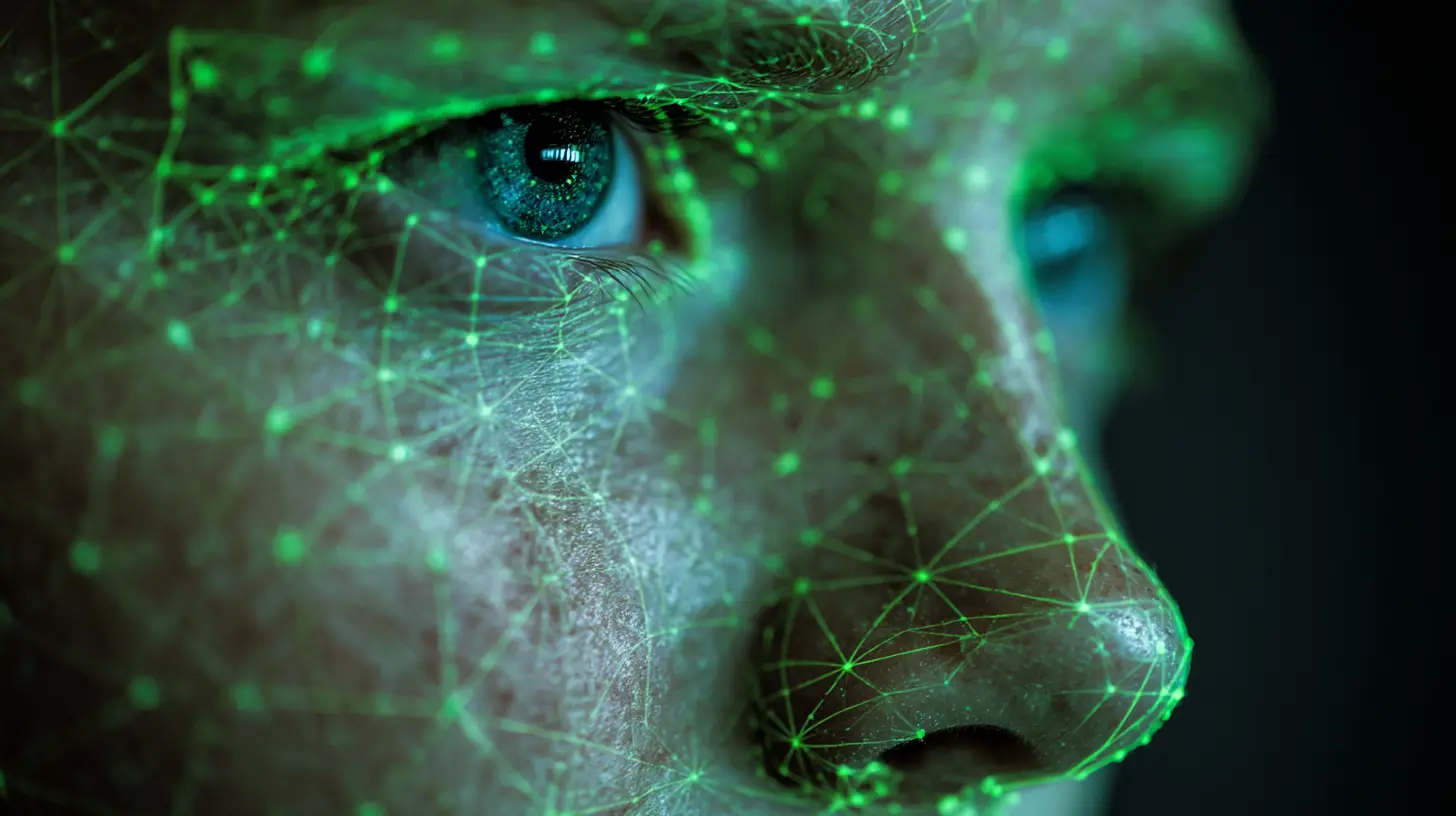
The second component is analysis. This involves extracting features from a detected face. The system measures the distance between your eyes, the shape of your jaw, the contour of your cheekbones, and hundreds of other geometric markers. It converts these measurements into a mathematical template, often called a faceprint. This template is what gets stored in a database. It is not a photo. It is a numerical representation of your facial structure.
The third component is matching. This is where the system compares a new faceprint against a database of stored faceprints. It returns a similarity score. If the score exceeds a threshold, the system declares a match. The threshold is critical. A low threshold produces more matches but also more false positives. A high threshold reduces false positives but may miss real matches. Getting this balance wrong has real consequences, as we will see later.
The fourth component, and the one that is often overlooked, is the database itself. The system is only as private as the database it relies on. A face recognition system with no database is just a camera. A face recognition system with a poorly secured database is a surveillance network waiting to be hacked.
Each of these components introduces its own risks. Detection can happen without consent. Analysis can extract more information than the system needs. Matching can produce errors that are hard to correct. And databases can be breached, misused, or repurposed. When people argue about face recognition privacy, they are usually arguing about the last two components. But the first two matter too, because they are the parts that run silently in the background.
The Accuracy Problem That Nobody Wants To Talk About
There is a persistent myth that face recognition is nearly perfect. That myth comes from controlled demonstrations where the lighting is good, the subject is cooperative, and the camera is close. Real-world conditions are nothing like that.In a crowded airport, faces are partially obscured by scarves, hats, and sunglasses. Lighting changes as people move through shadows. Cameras capture faces at awkward angles. People are moving. All of these factors reduce accuracy. The result is that face recognition systems perform far worse in the field than they do in the lab.
The accuracy problem is not evenly distributed. Studies have repeatedly shown that face recognition algorithms make more errors on women, on people with darker skin, and on older adults. This is not because the algorithms are inherently racist or sexist. It is because the training data used to build them has historically been dominated by lighter-skinned male faces, often from public datasets scraped from the internet. When a system has not seen enough examples of a particular face type, it has trouble recognizing that face type.
This has real consequences. If a face recognition system is used to unlock a phone, a false rejection is an inconvenience. If it is used to identify a suspect from a police body camera, a false match can lead to an arrest of the wrong person. There have been documented cases of innocent people being detained because a face recognition system matched them to a suspect they had never met. These are not hypothetical scenarios. They have happened.
The accuracy problem also creates a fairness problem. If the system is less accurate for certain groups, then those groups bear a disproportionate share of the burden. They are more likely to be falsely accused, more likely to be stopped at borders, and more likely to be denied access to services. The technology is not neutral. It carries the biases of its creators.
Real-World Deployments and the Lessons They Teach
Looking at actual deployments helps ground the debate. Consider the airport security line. Many international airports now use face recognition to match passengers to their passport photos. The system speeds things up and reduces the need for human agents. But it also means that every passenger who passes through is having their face captured and compared against a government database. Most passengers are not told this in any meaningful way. They just see a camera and assume it is part of the security process.Then there is the retail use case. Some stores use face recognition to identify known shoplifters as soon as they walk in. The idea is to prevent theft before it happens. But the same system can also identify loyal customers, track their movements through the store, and build a profile of their shopping habits. What starts as a security tool becomes a marketing tool. The customer never consented to this. They just walked into a store.
The most controversial deployments are in law enforcement. Police departments in several cities have used face recognition to scan footage from street cameras and identify suspects in real time. This is a powerful tool for solving crimes. It is also a powerful tool for monitoring political protests, tracking journalists, and chilling free speech. The same technology that catches a car thief can also be used to identify someone attending a rally for a cause the government dislikes.
Each of these deployments teaches a different lesson. The airport teaches us that convenience is a powerful driver of consent. The retail store teaches us that commercial incentives will always push the boundaries of what is acceptable. The police department teaches us that the state has an interest in surveillance that goes far beyond crime prevention. None of these lessons are comfortable, but they are all important.
The Trade-Off Between Security and Privacy
The standard argument in favor of face recognition is that it makes us safer. Catching terrorists, finding missing children, and stopping violent criminals are all noble goals. Nobody wants to give those up. But the trade-off is rarely presented honestly.Security is not a single thing. It is a bundle of different goals, and face recognition helps with some of them more than others. It is excellent at identifying a known person in a crowd. It is terrible at predicting who will commit a crime. It is good at finding a missing child if the child has been photographed before. It is useless if the child has no existing photos in a database. The technology is a tool, and like any tool, it is good at some tasks and bad at others.
The privacy cost is also not a single thing. It is a bundle of harms. There is the harm of being watched without consent. There is the harm of being misidentified. There is the harm of having your movements tracked and stored. There is the harm of chilling effects, where people avoid certain places or activities because they fear surveillance. Each of these harms is real, and each affects different people differently.
The honest trade-off is not security versus privacy. It is a specific security benefit versus a set of diffuse privacy costs. The security benefit is often immediate and visible. The privacy cost is often delayed and invisible. That asymmetry makes it very hard to have a fair debate.
The Illusion of Consent
One of the most common justifications for face recognition is that people consent to it. They walk into a store, they see the cameras, and they choose to stay. They fly on an airline, they read the terms, and they choose to fly. This sounds reasonable, but it falls apart under scrutiny.Consent requires a real choice. If the only way to enter a store is to be scanned, then the choice is not between being scanned and not being scanned. It is between being scanned and not shopping. If the only way to fly is to be scanned, the choice is between being scanned and not flying. These are not meaningful choices. They are coerced agreements.
There is also the problem of informed consent. Most people do not know what happens to their face data after it is captured. Is it stored? For how long? Who has access to it? Is it shared with third parties? The typical privacy policy is a wall of legalese that nobody reads. Even if someone does read it, they often cannot understand it. Consent without understanding is not consent. It is a formality.
Finally, there is the problem of asymmetric power. A large corporation or a government agency has resources that an individual does not. They can hire lawyers, build databases, and deploy systems at scale. The individual cannot. When the powerful ask for consent, the powerless are not really in a position to refuse. This is not a technical problem. It is a structural problem, and it will not be solved by better privacy policies.
What the Future Holds: Three Possible Directions
The future of face recognition is not predetermined. It will depend on the choices we make now. There are three broad directions the technology could take.The first direction is continued expansion. In this future, face recognition becomes as common as CCTV. It is embedded in every public space, every store, every workplace. It is used for everything from crime prevention to personalized advertising. Privacy becomes a niche concern, and the debate fades away because the technology is so entrenched that fighting it seems futile. This is the direction we are currently heading in.
The second direction is strict regulation. In this future, governments step in to limit how face recognition can be used. There are laws requiring explicit consent, limits on data retention, and bans on certain uses, such as real-time surveillance in public spaces. Some cities have already taken steps in this direction. This future preserves the benefits of the technology while constraining its worst excesses. It is possible, but it requires political will.
The third direction is technical innovation. In this future, researchers develop privacy-preserving versions of face recognition. These systems can verify your identity without storing your faceprint. They can match your face to a template without ever keeping a copy of the template. They use techniques like homomorphic encryption and federated learning to keep data on your device rather than in a central database. This is the most promising direction, but it is also the least certain. The technology is still in its early stages.
None of these directions is guaranteed. The future will likely be a mix of all three, with different regions and different sectors adopting different approaches. The outcome will depend on how well the public understands the issues and how effectively they advocate for the kind of future they want.
Practical Advice for Protecting Yourself Today
While the debate plays out, there are things you can do to protect your privacy right now. None of them are perfect, but they all reduce your exposure.First, be aware of your surroundings. Notice where the cameras are. Notice whether they are pointed at entrances, exits, and payment areas. If a store has obvious face recognition signage, consider whether the convenience is worth the privacy cost. Sometimes it is. Often it is not.
Second, use the settings on your devices. Your phone likely has face recognition built in. You can choose not to use it and rely on a PIN or password instead. You can also disable face recognition for certain apps. This does not stop cameras in public spaces from capturing your face, but it reduces the amount of data that is collected about you by your own devices.
Third, be careful about what you post online. Public photos of your face are a goldmine for anyone building a faceprint database. You do not have to stop posting photos, but you should be aware that anything you post publicly can be scraped and used. Consider using privacy settings to limit who can see your photos.
Fourth, support organizations and lawmakers that are pushing for sensible regulation. The debate is happening now, and it needs voices on the side of privacy. You do not have to be a privacy expert to make a difference. A letter to your representative, a vote for a candidate who takes privacy seriously, or a donation to a privacy advocacy group all matter.
The Misconception That Technology Is Neutral
There is a persistent belief that technology is neutral, that it is neither good nor bad, and that it only becomes good or bad based on how it is used. This belief is comforting, but it is wrong. Technology is designed by people with values, and those values are baked into the design.Face recognition systems are designed to be efficient, accurate, and scalable. Those are the values of the engineers who build them. Privacy is not a design goal. Consent is not a design goal. Fairness is not a design goal. They are afterthoughts, added later as patches or regulations. This is not a conspiracy. It is just the way software development works. You build what you are asked to build, and you optimize for what you are measured on.
The implication is that we cannot expect the market to solve the privacy problem. The market is good at optimizing for efficiency and profit. It is not good at optimizing for values that are hard to measure and easy to ignore. If we want privacy to be a design goal, we have to demand it. That means regulation, standards, and accountability. It means holding companies responsible when they misuse face data. It means treating privacy as a feature, not a bug.
The Role of Regulation and the Risk of Overcorrection
Regulation is not a silver bullet. Bad regulation can be worse than no regulation. A law that bans face recognition entirely would also ban the beneficial uses, like finding missing children or catching violent criminals. A law that is too vague would be toothless. A law that is too specific would be obsolete within a few years as the technology evolves.The challenge is to write regulation that is flexible enough to adapt to new developments and strict enough to protect fundamental rights. Some principles are clear. There should be a requirement for informed consent. There should be limits on how long face data can be stored. There should be a ban on real-time surveillance in public spaces unless there is a specific, documented threat. There should be a right to know if your face has been captured, and a right to request deletion.
The risk of overcorrection is real. If regulators respond to public fear by banning the technology outright, they will drive it underground. Companies will still use it, but they will do so without oversight. Police will still use it, but they will do so without accountability. A ban that is widely ignored is worse than a regulation that is widely followed.
The better approach is to create a framework that allows the technology to be used, but only under conditions that protect privacy and ensure fairness. This is not easy. It requires nuance, expertise, and a willingness to revisit the rules as the technology changes. But it is the only approach that has a chance of working.
A Final Thought on What Privacy Really Means
The privacy debate about face recognition is not really about cameras and algorithms. It is about the kind of society we want to live in. Do we want to live in a world where every public space is a surveillance zone, and every face is a data point? Or do we want to live in a world where we can move through public life without being tracked, where our identity is our own, and where the government and corporations have to justify their intrusions?Privacy is not about hiding. It is about having a private life. It is about being able to make mistakes without a permanent record. It is about being able to change your mind without being held to your past. Face recognition threatens all of those things because it creates a permanent, searchable record of where you have been and who you are.
The technology is not going away. It is too useful, too profitable, and too deeply embedded in the systems we rely on. But the debate is not over. It is just beginning. The choices we make in the next few years will determine what privacy means for the rest of the century. That is a heavy responsibility, but it is also an opportunity. We can shape the future. We just have to be willing to engage with the complexity of the problem instead of retreating to simple answers.
all images in this post were generated using AI tools
Category:
Digital PrivacyAuthor:

Adeline Taylor
Discussion
rate this article
1 comments
Gavin McDowney
Face recognition technology has huge potential but raises serious privacy concerns. Striking a balance between innovation and individual rights is crucial. We need open discussions and clear regulations to ensure this tech benefits society without infringing on privacy.
August 17, 2026 at 5:04 AM
Adeline Taylor
You raise an important point. Balancing innovation with privacy is essential. Open discussions and clear regulations will help us navigate these challenges effectively. Thank you for sharing your thoughts.