Tablet Innovations to Expect in 2027
26 April 2026
You know that feeling when you’re holding a tablet and you think, “This is great, but it could be so much more”? We’ve all been there. Tablets have been stuck in a weird middle ground for years—too big to be a phone, too small to be a laptop, and often lacking that “wow” factor. But if you’ve been paying attention to the tech rumblings, 2027 is shaping up to be the year tablets finally break their chains.
I’m not talking about a slightly faster processor or a marginally better camera. I’m talking about fundamental shifts—the kind that make you wonder why we ever put up with the clunky, power-hungry devices of the past. So, grab your current tablet (or that dusty one in your drawer), and let’s take a journey into the future. What can you actually expect from tablet innovations in 2027? Spoiler: It’s way cooler than a folding screen.
The Death of the Battery Anxiety: Solid-State Power
Let’s start with the elephant in the room—battery life. We’ve all been there: 3 PM, 15% battery, and you’re frantically searching for an outlet. By 2027, that anxiety should be a distant memory. Why? Because solid-state batteries are finally moving from lab experiments to consumer devices.Think of traditional lithium-ion batteries as a crowded subway car—ions are jostling around, creating heat, and losing energy. Solid-state batteries are like a private limousine service for those ions. They use a solid electrolyte instead of a liquid one, which means they can pack more energy into the same space without the risk of overheating or swelling.
What does that mean for you? Expect tablets in 2027 to run for two to three days on a single charge under normal use. And when you do need to juice up, we’re talking about a full charge in under 15 minutes. No more overnight charging rituals. You’ll plug it in while you grab a coffee, and by the time you’re back, it’s ready to go. It’s not just convenient—it’s liberating. Imagine taking your tablet on a weekend trip without even packing the charger.

Foldable Screens That Actually Make Sense
I know, I know—foldable phones have been around for a few years, and they’ve been… mixed. The crease, the fragility, the bizarre aspect ratios. But 2027 is the year tablets finally get the foldable treatment right. And here’s the kicker: it won’t be a gimmick.Picture a tablet that’s the size of a standard 11-inch screen when unfolded, but folds in half to fit in your jacket pocket. That’s the obvious part. The innovation lies in the hinge and the display material. By 2027, manufacturers will have perfected ultra-thin glass that can bend millions of times without showing a crease. The hinge will be a marvel of engineering—smooth, silent, and dust-proof.
But here’s the real game-changer: seamless multitasking. When you unfold a 2027 tablet, the operating system will instantly recognize the new screen real estate and adapt. You could have a video call on one half and a document on the other, with no weird black bars or app crashes. It’s like having a mini laptop that fits in your pocket, but without the keyboard bulk. And for creatives? Imagine unfolding a tablet to a full 13-inch canvas for drawing, then folding it back up to snap a photo. It’s not just versatile—it’s the Swiss Army knife of the digital age.
Holographic Displays: Not Science Fiction Anymore
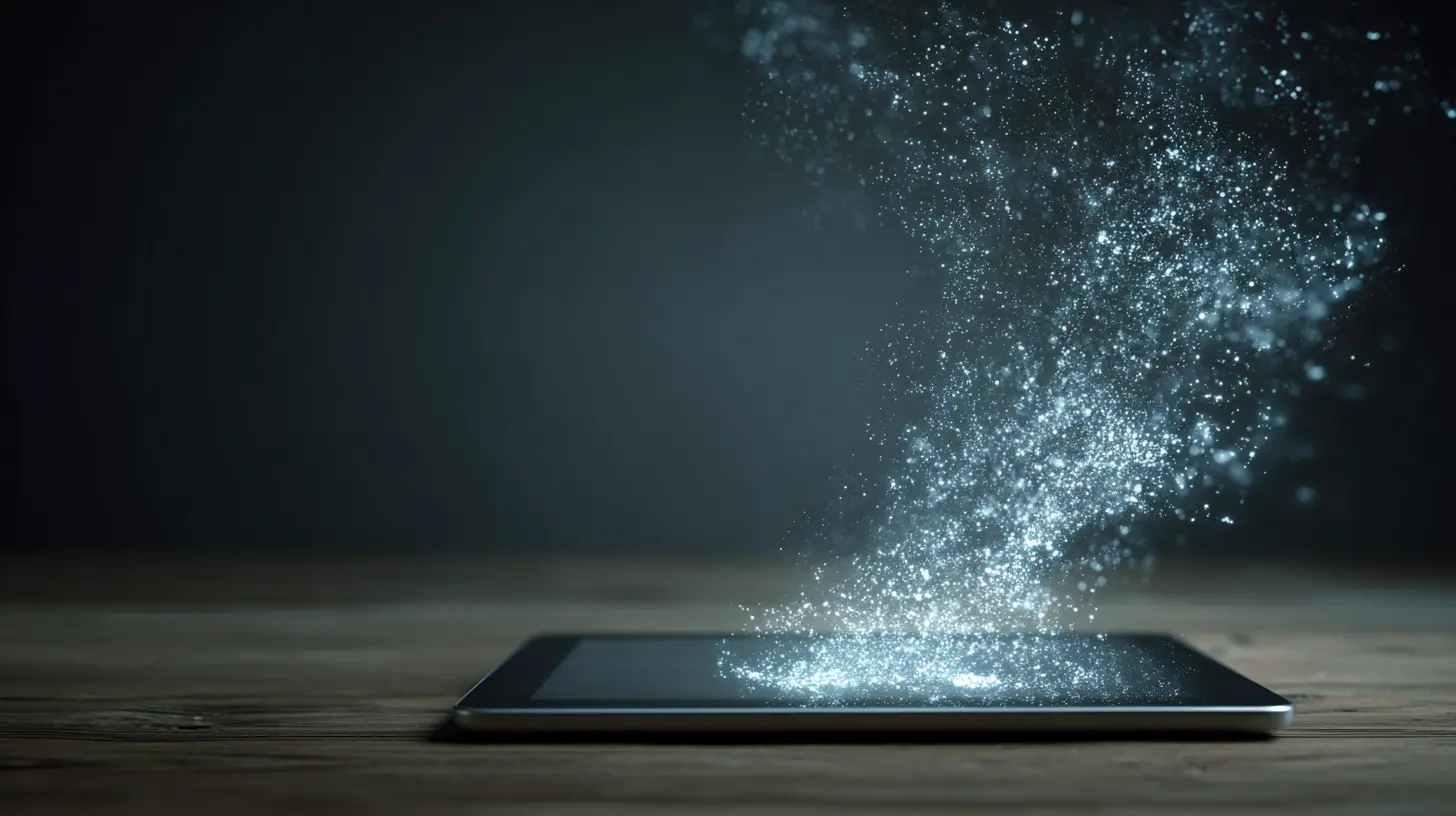
Okay, I’ll admit it—this one sounds like something out of Star Wars. But holographic displays are not only real; they’re about to become practical for tablets. By 2027, you’ll see devices that can project 3D images above the screen without requiring special glasses.How does it work? It’s a combination of advanced light-field technology and micro-LED arrays. Instead of showing a flat image, the screen emits light at different angles, creating the illusion of depth. Think of it like looking through a window versus looking at a photograph—the difference is night and day.
What will you actually use this for? Imagine a video call where your colleague’s face appears as a 3D hologram floating above your desk. Or a navigation app that shows a 3D map of the city, with buildings popping out of the screen. For designers, it means being able to rotate a 3D model with your fingers, seeing every angle without swiping. It’s not just cool—it’s a productivity revolution. The screen becomes a portal, not just a pane of glass.
AI That Knows You Better Than You Know Yourself
We’ve had AI assistants for years, but they’ve been dumb as rocks—responding to specific commands, getting confused by context, and generally feeling like a chat bot from 2010. By 2027, tablet AI will be so integrated that you’ll forget it’s there. It won’t be a separate app you open; it’ll be the operating system.Here’s a scenario: You wake up, pick up your tablet, and it already knows your schedule. It’s pulled up the weather, your calendar, and a summary of last night’s emails—but only the important ones. You start typing a message to a colleague, and the AI finishes your sentences with uncanny accuracy, not by guessing, but by understanding your writing style and intent.
But it goes deeper. The tablet’s AI will learn your habits. If you always read news in the morning and sketch in the afternoon, it will automatically arrange your apps and suggest content. If you’re researching a topic, it will proactively pull up relevant articles, videos, and even summarize them for you. It’s like having a personal assistant who never sleeps, never judges, and actually remembers everything.
And yes, there’s a privacy angle. By 2027, all of this AI processing will happen on-device, not in the cloud. Your data stays on your tablet, encrypted and private. The AI learns from you, but it doesn’t share your secrets with some distant server. That’s a huge leap from today’s “we’ll store everything forever” approach.
The Return of the Stylus (But Way Better)
Remember when the stylus was considered a relic, something from the Palm Pilot era? Well, it’s making a comeback, and in 2027, it’s going to be unrecognizable. We’re not talking about a plastic nub that scratches your screen. We’re talking about a stylus that feels like a real pen, paper, and ink—all in one.The innovation here is haptic feedback and pressure sensitivity that rivals the finest fountain pens. When you press down, the stylus simulates the resistance of paper. When you tilt it, it creates shading like a pencil. And the latency? It’s down to less than a millisecond. You won’t see the line appear after your stroke—it’ll appear exactly where you draw, instantly.
But the real kicker is the integration with the screen. By 2027, tablet screens will have a textured surface that mimics paper. Not a plastic film, but actual microscopic textures that feel like cotton fiber or smooth vellum. You’ll be able to choose your “paper” just like you choose your font. For artists, students, and note-takers, this is the holy grail. You can finally ditch the paper notebook and feel the same satisfaction of writing by hand.
Connectivity That Leaves Wi-Fi in the Dust
Let’s be real: Wi-Fi is great until it’s not. In a crowded coffee shop, at an airport, or even at home when everyone’s streaming—it stutters, drops, and drives you crazy. By 2027, tablets will have a new standard: Wi-Fi 8, combined with 6G cellular.Wi-Fi 8 isn’t just faster—it’s smarter. It can handle dozens of devices simultaneously without slowing down. Think of it like a highway with dynamic lanes—it automatically adjusts to traffic. And 6G? It’s not just about speed (though we’re talking 100 Gbps). It’s about latency so low that you can’t perceive it. Streaming 8K video, playing cloud-based games, or doing real-time video editing over the air will feel like everything is stored locally.
But here’s the hidden gem: seamless handoff. Your tablet will automatically switch between Wi-Fi, 6G, and even satellite connectivity without you noticing. You could be on a video call walking from your house to your car, and the call won’t drop. It’s the end of “Can you hear me now?” moments.
Cameras That See Beyond Visible Light
Tablet cameras have always been an afterthought. “Who takes photos with a tablet?” people ask. Well, by 2027, you might want to. The camera systems on tablets will be radically different—they won’t just capture what you see, but what you can’t.We’re talking about multispectral sensors that can detect heat, depth, and even chemical composition. Imagine pointing your tablet at a plant and instantly seeing its health—whether it needs water, has a pest problem, or is thriving. Or scanning a meal to get a nutritional breakdown. For professionals, this is huge. Architects can scan a room and get instant 3D models with material analysis. Mechanics can look at an engine and see heat signatures that indicate problems.
The front-facing camera will also get a massive upgrade. By 2027, it will use infrared and time-of-flight sensors to create a perfect 3D map of your face for video calls. The result? You’ll appear as a natural, 3D avatar that moves and blinks realistically. No more “you’re frozen” moments. It’s like being in the same room, even when you’re miles apart.
Modular Components: The Right to Upgrade
One of the biggest frustrations with tablets is that they’re sealed coffins. You buy one, and two years later, it’s obsolete. The battery degrades, the storage fills up, and you can’t do anything about it. But 2027 will see the rise of modular tablets.Think of it like building with LEGO bricks. The screen, the battery, the processor, and the storage will be separate modules that you can swap out. Want a better camera? Snap on a new module. Need more battery life? Slide in a larger pack. The processor is outdated? Replace just that part.
This isn’t just about convenience—it’s about sustainability. E-waste is a massive problem, and modular tablets could reduce it significantly. Instead of throwing away the whole device, you upgrade only what’s needed. And the best part? It’s designed to be user-friendly. No tools required. You pop open a latch, slide out the old module, and click in the new one. It’s the right to repair, finally done right.
The Software Revolution: A Unified Operating System
Hardware is only half the story. By 2027, the software on tablets will be a seamless blend of mobile and desktop experiences. We’re not talking about a “desktop mode” that’s clunky and glitchy. We’re talking about an operating system that adapts to your context.When you’re holding the tablet in portrait mode, it behaves like a phone—apps are full-screen, gestures are intuitive. When you attach a keyboard or stand, it switches to a desktop interface with windows, taskbars, and keyboard shortcuts. But here’s the magic: it’s all the same apps, same files, same workflow. No syncing, no compatibility issues.
This is powered by a new generation of ARM-based processors that are as powerful as desktop chips. You’ll be able to edit 4K video, run complex simulations, or code in multiple languages, all on a tablet that’s thinner than a magazine. And with the AI integration, the OS will predict what you need next. It’s not just an upgrade—it’s a paradigm shift in how we think about mobile computing.
Health Sensors: Your Tablet as a Wellness Hub
Finally, let’s talk about health. By 2027, your tablet will be a passive health monitor. It will use sensors embedded in the screen and frame to track your heart rate, respiration, and even stress levels—all without wearing anything.How? The screen emits light that reflects off your skin, and the camera analyzes the subtle changes in blood flow. It’s called photoplethysmography, and it’s already used in smartwatches. But in a tablet, it’s more accurate because the sensor area is larger. You’ll be able to place your finger on a specific spot and get a detailed health report in seconds.
But it goes further. The tablet will use your voice tone, typing speed, and even how you hold it to detect fatigue or illness. It might suggest you take a break, drink water, or even call a doctor. For people with chronic conditions, this could be life-changing. It’s like having a wellness coach that’s always with you, but never intrusive.
Wrapping It Up: The Tablet Renaissance
So, here’s the honest truth: 2027 won’t just be another year of incremental updates. It’s the year tablets finally shed their identity crisis. They’re becoming what we always hoped they’d be—powerful, flexible, intelligent, and personal. From solid-state batteries that last days to holographic displays that bring content to life, the innovations are real, and they’re coming fast.Are you ready to say goodbye to battery anxiety, clunky multitasking, and disposable devices? Because 2027 is knocking, and it’s bringing a tablet that’s less like a gadget and more like a partner. The only question left is: which one will you choose?
all images in this post were generated using AI tools
Category:
Technology ReviewsAuthor:

Adeline Taylor
Discussion
rate this article
2 comments
Jasmine Erickson
Exciting insights on future tablet innovations! I'm particularly eager to see advancements in display technology and battery life. These improvements could reshape how we use tablets for work and entertainment... Keep it up!
May 15, 2026 at 4:54 AM
Adeline Taylor
Thanks for your enthusiasm! The future of display tech and battery life really does hold exciting potential. Stay tuned for more updates!
Ivan McCullough
Tablets will redefine our future!
May 6, 2026 at 10:24 AM
Adeline Taylor
Absolutely! The potential of tablets is exciting, and 2027 could bring some amazing advancements.