The Future of Autonomous Vehicles Powered by Deep Learning
9 August 2026
Let's cut the polite nonsense. For over a decade, we have been sold a future where you nap in the backseat while your car handles the morning commute. That future is not only delayed; it is fundamentally different from what the marketing brochures promised. The reason is not a lack of sensors or computing power. The reason is that we underestimated how stubborn reality is. And the only thing that has a fighting chance against that stubbornness is deep learning. Not rule-based logic, not hand-coded maps, but neural networks that learn to drive the way humans do: badly at first, then with a weird mix of caution and aggression. This is the real story of where autonomous vehicles are going, and it is far more interesting than the rosy timelines you have heard.
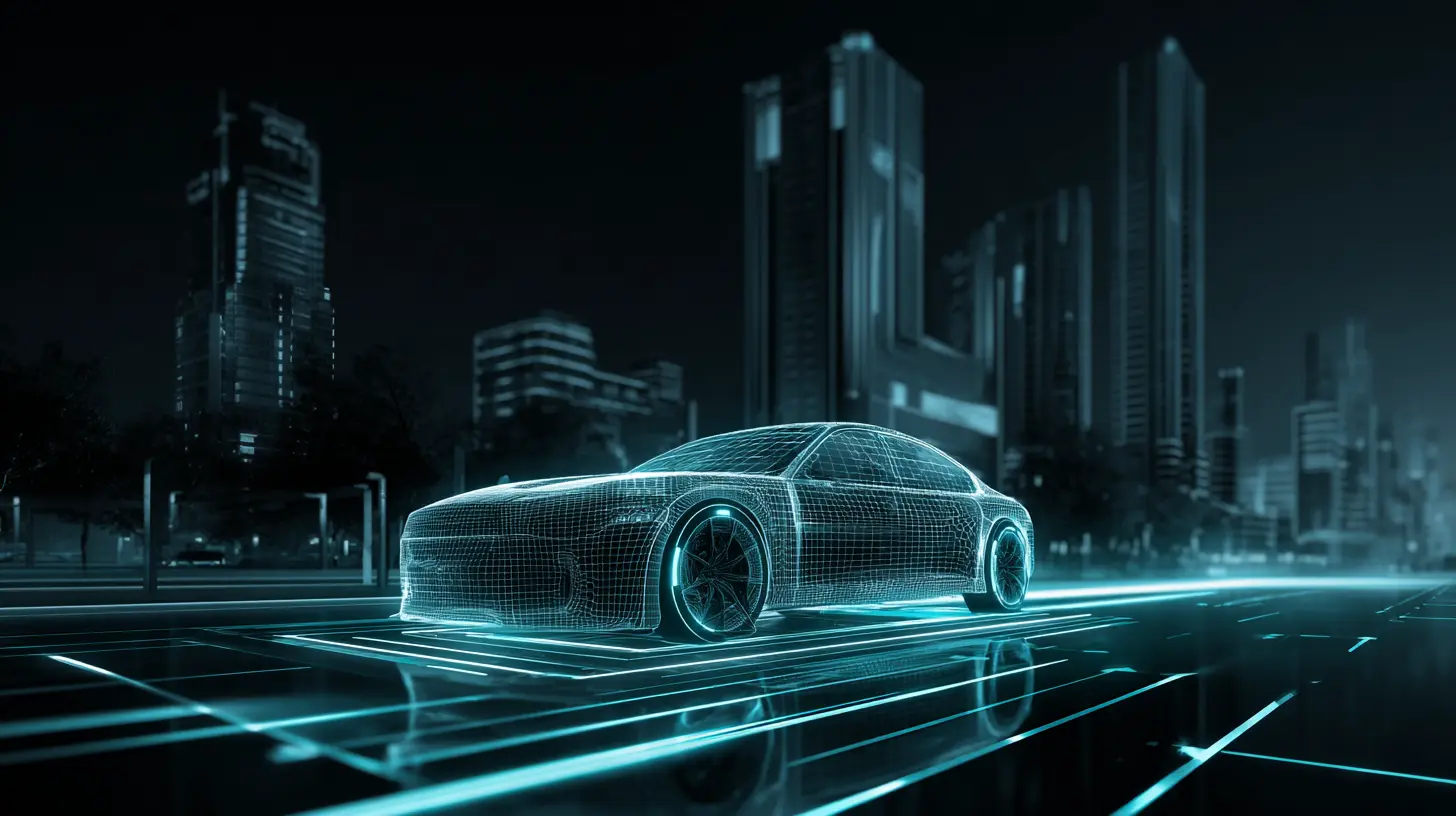
The End of the "Everything Is Mapped" Era
For years, the dominant approach to autonomy was a glorified game of connect-the-dots. Companies like the early leaders in the space built high-definition 3D maps of every road, every lane marking, every traffic light, and every curb. The vehicle then localized itself within that map using GPS and lidar, and essentially drove by matching what its sensors saw to the pre-recorded world. It worked beautifully in test zones. It worked terribly everywhere else.The problem is that the world does not stay still. A road is repainted. A traffic light is moved during construction. A tree grows and blocks a sign. A truck parks where a lane used to be. The moment the vehicle encounters something not in the map, it freezes. This is called the "long tail" problem, and it is the graveyard of autonomous vehicle programs. The old approach tried to handle the long tail by adding more rules: if you see this, do that. But the number of "this" scenarios is effectively infinite. You cannot write enough rules.
Deep learning changes the game because it does not rely on explicit rules. Instead, it learns a mapping from raw sensor data to driving actions. You feed it millions of hours of driving footage, and it builds an internal representation of what a road looks like, what a pedestrian looks like, what a dangerous situation looks like, and what a safe response is. This is not about memorizing roads. It is about generalizing from experience. The shift is from "I know this street" to "I know what streets look like." That is the only scalable path forward.
Why Convolutional Neural Networks Are Not Enough Anymore
Early deep learning for self-driving cars was dominated by convolutional neural networks (CNNs). They are excellent at image recognition. Give a CNN a camera frame, and it can tell you where the lane lines are, where the cars are, and where the pedestrians are. But driving is not a single-image problem. It is a temporal problem. You need to know not just where a car is, but where it was half a second ago and where it is likely to be in the next half second. CNNs, by themselves, have no memory. They treat each frame as an independent event.This is where recurrent architectures and, more importantly, transformers have stepped in. Transformers, which originally revolutionized natural language processing, are now being applied to driving. They can process sequences of frames and learn the relationships between them. They can track an object over time, predict its trajectory, and understand the context of a scene. For example, a transformer can learn that a pedestrian standing at a crosswalk with their back turned is different from a pedestrian standing at the same crosswalk looking at your car. The former is a static object. The latter is a potential jumper into your path. CNNs cannot easily capture that nuance. Transformers can, because they weigh the importance of every element in the sequence against every other element.
The practical implication is that modern autonomous driving stacks are becoming less about hand-tuned perception modules and more about end-to-end or near-end-to-end learning. You feed in raw sensor data, and a single large network outputs steering, braking, and acceleration commands. This is not just a technical preference. It is a necessity. The complexity of real-world driving cannot be captured by a pipeline of separate modules that do not talk to each other. When perception makes a mistake, the planner downstream has no idea. When the planner makes a bad decision, the perception module does not learn from it. End-to-end learning forces the entire system to optimize for the final goal: safe and comfortable driving.
The Sensor Debate Is a Distraction
There is a tiresome argument about whether cameras are enough or whether you need lidar. The answer is that it depends on what you are trying to achieve, and the deep learning community has made this debate largely obsolete. Cameras provide rich semantic information. They see color, texture, and text. They can read a "No Parking" sign or detect that a traffic light is flashing yellow. Lidar provides precise depth information but is semantically blind. It sees a point cloud, not a sign.The smart play is not to choose one. It is to fuse them using deep learning. Modern architectures take camera images, lidar point clouds, and radar returns, convert them into a shared representation, and then process them together. This is called sensor fusion, and it is where deep learning shines. The network learns when to trust which sensor. In bright sunlight, the camera is reliable. In heavy rain, lidar might be degraded, but radar is not. In darkness, the camera struggles, but lidar does not care. A well-trained fusion network does not need explicit rules for these conditions. It learns the statistical reliability of each sensor in different contexts.
The real cost issue is not the sensors themselves. It is the compute required to process them. A high-resolution camera stream at 30 frames per second is a massive amount of data. Add lidar and radar, and you are drowning in information. Deep learning models, especially transformers, are compute-hungry. The future of autonomous vehicles is not just about better algorithms. It is about better hardware, specifically neural processing units and tensor cores that can run these models in real time without draining the car's battery or turning the cabin into a sauna.
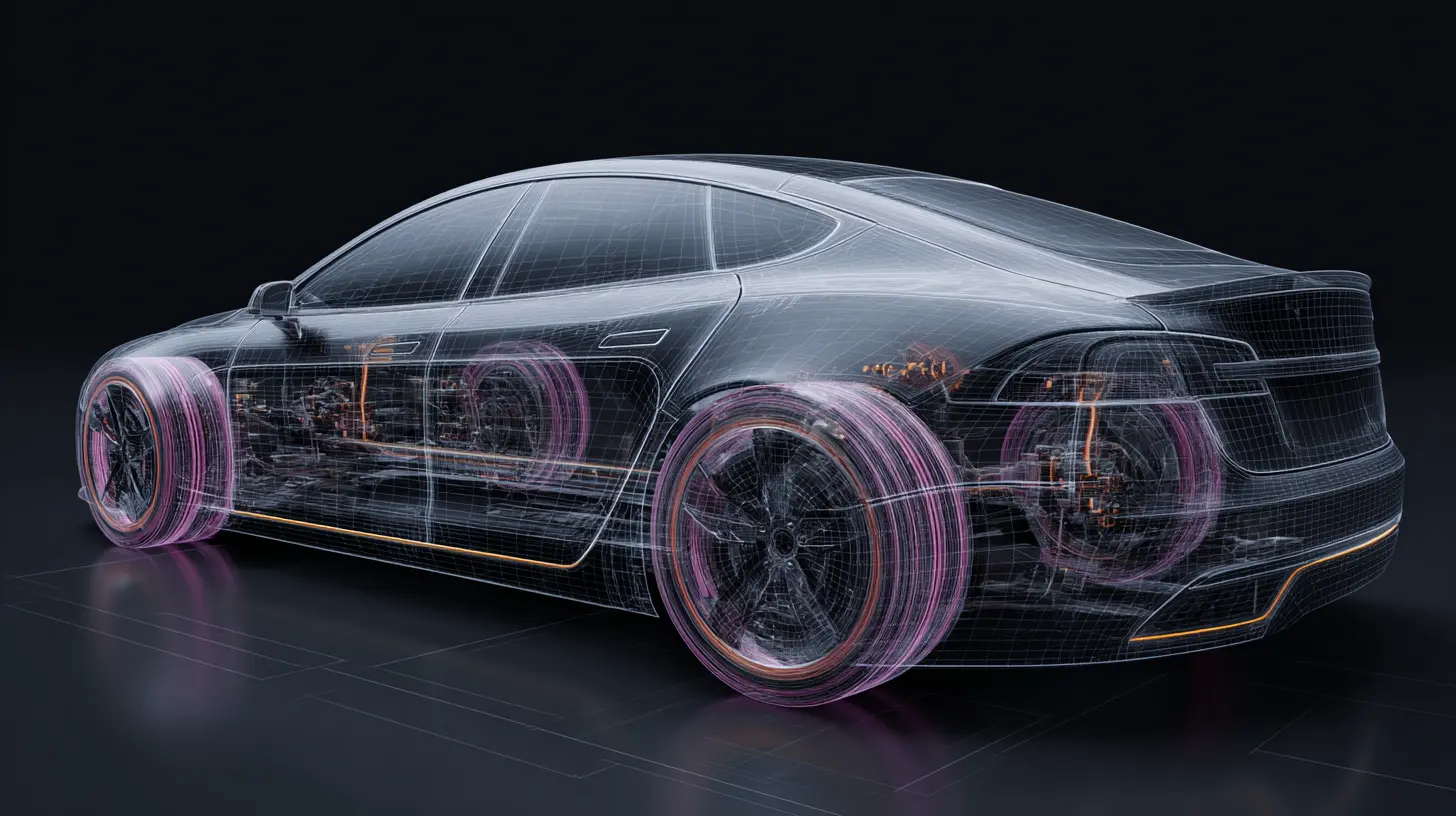
The Training Data Problem Nobody Wants to Admit
Here is the uncomfortable truth: deep learning for driving is data-hungry in a way that is almost obscene. You cannot just collect a few thousand hours of highway driving and call it a day. You need millions of hours, covering every conceivable scenario: snow, fog, night, construction zones, near-misses, aggressive drivers, deer jumping out of the woods, children chasing balls into the street. And you need not just the driving footage. You need the labels. You need to know exactly where every object was, what it was doing, and what the correct action was.This is why simulation has become a critical tool. But here is the catch: simulation is only useful if the simulated world is realistic enough that the model does not learn to exploit simulation artifacts. If your simulated pedestrians always walk in straight lines, your model will learn to expect straight lines. The moment a real pedestrian jogs, your model fails. The best practice is to use simulation for edge cases and for generating synthetic data that augments real data, but never to rely on it exclusively. You need real-world data to ground the model in reality, and simulation to expand the coverage of rare events.
Another underappreciated problem is data bias. If you train your models primarily on data from California and Arizona, your vehicles will be terrible in Michigan winters or Boston's chaotic intersections. Deep learning models are notorious for picking up on spurious correlations. A model might learn that pedestrians are always on the right side of the road, because that is where they appeared in the training data. It will then fail when a pedestrian is on the left. You have to actively curate your dataset to ensure diversity of geography, weather, time of day, and cultural driving norms. This is not a one-time effort. It is a continuous process.
The Black Box Problem and the Safety Case
The biggest resistance to deep learning in autonomous vehicles comes from safety regulators and insurance companies. They ask a simple question: why did the car do that? And the deep learning model cannot answer. It is a black box. You can show that it generally drives well, but you cannot point to a specific rule that it followed in a specific situation. This is terrifying for people whose job is to assign blame and liability.There are two schools of thought here. The first is to demand interpretability. This means designing models that can explain their decisions, for example by highlighting which parts of the input image were most influential. The problem is that these explanations are often post-hoc rationalizations. They do not tell you the true internal reasoning. The second school of thought is to accept the black box and instead focus on rigorous testing and validation. You cannot explain why the model made a decision, but you can prove statistically that it makes safe decisions across a huge distribution of scenarios. This is the approach used by many advanced driver assistance systems today. It is not perfect, but it is practical.
My opinion is that the future will be a hybrid. You will have a deep learning model that handles the vast majority of driving, but you will also have a separate, simpler, rule-based safety monitor that checks for basic violations. For example, the deep learning model might be in charge of steering and speed, but a simple algorithm will ensure the car never exceeds a certain speed limit or gets too close to the car ahead. This is called a safety envelope, and it is a pragmatic compromise. It does not solve the black box problem, but it limits the damage the black box can do.
The Real Timeline and What to Expect
Let me be blunt. Level 5 autonomy, where a car can drive anywhere in any condition with no human intervention, is not coming in the next five years. It might not come in the next twenty. The reason is not technological. It is operational. The world is too messy, and the cost of a single mistake is too high. What we will see instead is a gradual expansion of Level 4 autonomy, where the car can drive itself in a defined operational design domain, such as a geofenced urban area or a specific highway corridor.The first places to see this will be controlled environments: airport shuttles, campus buses, and dedicated freight corridors. Then it will spread to cities with predictable weather and well-marked roads. The technology will not be a single breakthrough. It will be a thousand small improvements in model robustness, sensor reliability, and compute efficiency.
For consumers, the near-term future is not about sleeping in the backseat. It is about hands-free driving on highways, with the system constantly monitoring the driver and requiring them to take over when conditions exceed the system's capabilities. This is not a failure. It is a sensible progression. The companies that succeed will be the ones that are honest about the limitations of their systems and design them to fail gracefully. The companies that fail will be the ones that overpromise and underdeliver, eroding public trust.
Practical Advice for Engineers and Decision Makers
If you are building an autonomous vehicle system, or making decisions about investing in one, here is what you need to know.First, invest in data infrastructure before you invest in models. A brilliant model trained on bad data is worthless. You need a pipeline for collecting, cleaning, labeling, and versioning data. This is unglamorous work, but it is the foundation of everything else.
Second, do not chase the latest architecture just because it is trendy. Transformers are great, but they are also heavy. For a real-time system in a car, you need to balance model accuracy with inference latency. Sometimes a well-tuned CNN is the right choice for a specific perception task. Do not be afraid to use a hybrid approach.
Third, build a robust simulation environment, but treat it as a complement to real-world testing, not a replacement. Your simulation should be adversarial. It should try to break your model. If you are not regularly finding failure cases in simulation, you are not testing hard enough.
Fourth, think about the human factor. Even at Level 4, there will be times when the system needs to hand control back to a human. The transition is dangerous. A driver who has been reading a book for twenty minutes is not ready to take over in two seconds. The system must be designed to manage these transitions safely, either by giving ample warning or by pulling over and stopping.
Finally, do not underestimate the importance of cybersecurity. A deep learning model is software, and software can be hacked. An attacker could potentially trick a model into misclassifying a stop sign by placing a few stickers on it. This is called an adversarial attack, and it is a real threat. You need to test your models against adversarial inputs and design them to be robust to small perturbations.
Common Misconceptions That Need to Die
One misconception is that autonomous vehicles will eliminate all traffic accidents. They will not. They will reduce accidents caused by human error, but they will introduce new types of accidents caused by software errors, sensor failures, and unforeseen edge cases. The goal should be to make driving significantly safer, not perfect.Another misconception is that deep learning is a magic wand. It is not. It is a powerful tool, but it requires careful engineering, massive data, and constant validation. A model that works in a demo will not necessarily work in production. The gap between a research prototype and a mass-produced vehicle is enormous.
A third misconception is that more data is always better. This is false. More data can actually hurt if it is redundant or if it reinforces biases. What you need is diverse, high-quality, well-labeled data. Sometimes a small, carefully curated dataset is more valuable than a huge, messy one.
The Bottom Line
The future of autonomous vehicles powered by deep learning is not a single moment of magic. It is a long, hard grind of incremental progress. The technology is real, and it is improving. But it is improving in the way that a marathon runner improves, not in the way that a light switch turns on. The winners will be the organizations that respect the complexity of the problem, invest in the unglamorous work of data and validation, and are honest about what their systems can and cannot do.Do not believe the hype. Do not believe the doom and gloom either. Believe in the process. Deep learning is the right tool for this job, but it is a tool that requires skill, patience, and a healthy dose of humility. The cars are coming. They just are not coming as fast as anyone hoped, and they will not be as perfect as anyone dreamed. They will be better than human drivers in some ways and worse in others. And that is okay. That is progress.
all images in this post were generated using AI tools
Category:
Deep LearningAuthor:

Adeline Taylor
Discussion
rate this article
1 comments
Eva McDonough
Exciting times ahead! The leap in deep learning for autonomous vehicles is remarkable. Imagine a world where cars drive themselves, making our journeys safer and smoother. The future is bright and full of possibilities!
August 13, 2026 at 5:01 AM
Adeline Taylor
Absolutely! The advancements in deep learning are truly transforming transportation. A future with self-driving cars could enhance safety and change how we think about travel. Exciting times indeed!