The Future of Gesture-Controlled Devices
6 June 2026
If you’ve ever waved your hand in front of a screen and watched it react—maybe skipping a song or zooming in on an image—then you’ve already dipped your toes into the world of gesture-controlled devices. Sounds futuristic, right? But here’s the kicker: that future is already here, and it's growing fast.
Gesture control tech has been floating around for years, popping up in gaming consoles, smartphones, and even smart TVs. Yet, it's only scratching the surface of what's possible. We're entering a new era where touching a screen or clicking a button might feel as old-fashioned as using a rotary phone.
Let’s break down where this tech is going and why it’s going to completely change the way we interact with devices—possibly sooner than you think.
What Exactly Are Gesture-Controlled Devices?
Alright, let’s clear the air first. Gesture-controlled devices use cameras, sensors, and software to interpret human body movements—mostly hand motions—as inputs. Instead of tapping or clicking, you simply wave, point, pinch, or even blink to control a system.Imagine turning up the volume of your music just by twirling your finger in the air or flipping through slides during a presentation with a subtle swipe of your hand. Pretty cool, huh?
These devices rely on motion-sensing tech like infrared sensors, depth cameras (think Microsoft Kinect), and even AI algorithms that can understand complex human gestures. The intent? To make interaction as natural as talking or moving.
A Quick Look Back—How We Got Here
Gesture control didn’t just appear out of thin air. It evolved from decades of innovation. Let’s rewind a bit.- 1980s–1990s: Early research in Human-Computer Interaction (HCI) introduced clunky gesture sensors and gloves—far from practical, but clever for their time.
- 2000s: Things started to heat up. Sony’s EyeToy and Nintendo's Wii gave us hands-free gaming. The idea got real when Microsoft Kinect hit the market.
- 2010s: Smartphones and VR headsets began experimenting with gesture-driven UIs. Leap Motion brought precise finger-tracking to PCs. Google added motion sense to its Pixel phones.
- 2020s and Beyond: Now, we're looking at gesture control going mainstream—from smart TVs and cars to AR glasses and medical equipment.
So yeah, it's been a journey. And we’re just getting started.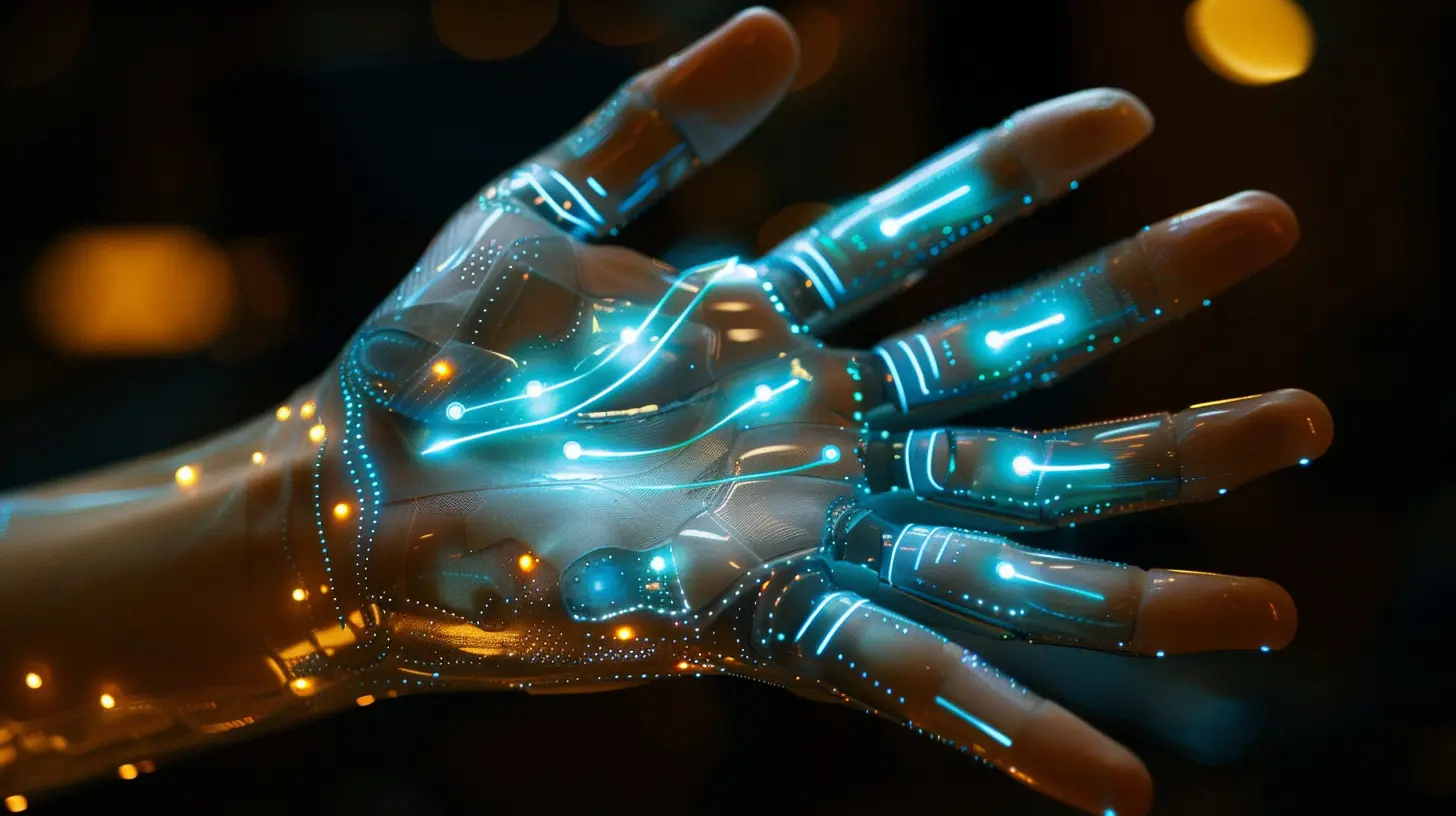
Why Gesture Control Matters More Than Ever
Let’s be honest. We’re drowning in screens and devices—phones, watches, tablets, consoles, laptops. And what’s the common thread? Most need physical touch or voice commands. But both have limits.Picture this:
- Your hands are dirty while cooking, but you want to change the song.
- You're wearing gloves and trying to tap a tiny screen.
- You're in a quiet library and can’t use voice commands.
Gesture control solves all this. It’s clean, contactless, and intuitive. In a world more conscious about hygiene (thanks, global pandemics), the appeal is undeniable.
Plus, it’s just more immersive. Instead of adapting yourself to the machine, the machine adapts to you. That’s the dream, isn't it?
Devices Already Using Gesture Control
We’re not waiting for the future—gesture-controlled tech is already here in many forms:1. Smartphones
Google’s Pixel 4 had a radar-based Soli chip that let users wave to skip songs or hush alarms. While not universally loved, it was a peek into what’s possible.2. Laptops and PCs
HP, Dell, and Lenovo have dabbled in gesture-enabled touchpads. Leap Motion’s hand-tracking sensor brought Minority Report-style control to desktops.3. Gaming Consoles
Microsoft Kinect may be discontinued, but its legacy lives on. Nintendo Switch and VR systems like Oculus Quest are pushing motion and gesture recognition harder than ever.4. Smart TVs
Samsung and LG have included gesture navigation in their smart TVs for years. Point and swipe to scroll menus or change channels—no remote needed.5. Vehicles
Some luxury cars (BMW, Mercedes-Benz) let you change the radio station or answer calls with a flick of the wrist. Useful when your hands are already full with the wheel.What’s Fueling the Gesture Control Revolution?
Technology’s evolving like crazy, and that’s feeding directly into the rise of gesture-controlled gadgets. Here’s what’s pushing the envelope:1. Artificial Intelligence & Machine Learning
AI is getting really good at recognizing patterns. It can now distinguish between an intentional gesture and a random hand movement. That helps reduce false commands, which used to be a big issue.2. Advanced Sensors
Infrared, ultrasonic, 3D cameras—these aren’t sci-fi anymore. Smaller, cheaper, more accurate sensors are making it easier for devices to "see" you.3. Edge Computing
Processing gesture data in real time, on-device, means faster responses, less lag, and greater privacy. You don’t need to send every hand wave to the cloud.4. 5G Networks
Low latency = smoother performance. 5G is making it possible for gesture-controlled systems (especially in VR/AR) to function seamlessly.The Big League: AR, VR, and the Metaverse
Now this is where gesture control is REALLY blowing up.In virtual and augmented reality, traditional controllers feel like a barrier. If you’re trying to feel immersed in a digital world, do you really want to fumble around with clunky joysticks?
Gesture tracking lets you interact naturally with digital environments—grabbing, throwing, drawing, pointing—just like you would IRL.
Companies like Meta (formerly Facebook) are betting big on this with their Quest headsets. Apple, too, with its Vision Pro headset, is all about hand and eye-tracking as the primary interface. No controller needed—just your gaze and your gestures.
The metaverse (though still finding its feet) depends heavily on intuitive interaction. And nothing says “intuitive” like using your own hands.
Real-World Use Cases You Might Not Expect
Beyond gaming and phones, gesture control is opening doors in industries you probably haven’t even considered.1. Healthcare
Surgeons can navigate medical images during surgery without touching screens. That’s a game-changer for hygiene and efficiency.2. Retail
Imagine browsing clothes in a store by swiping through a virtual catalog in the air—no physical touchpoints required.3. Education
Gesture-driven AR models can bring lessons to life—rotate a 3D heart model mid-lecture, using just your fingers.4. Accessibility
For users who can’t use traditional input devices, gestures offer a new level of freedom and independence.Challenges That Still Need Ironing Out
Let’s be fair—gesture control isn’t perfect yet. There are still hurdles.1. Accuracy
Sometimes it just doesn’t get what you’re trying to do. Nobody wants to deal with false positives or bad reads.2. Learning Curve
Not everyone’s on board. Teaching users a new way to navigate can be tricky.3. Device Integration
Not all devices play nice with gesture tech. Standardization is still a work in progress.4. Battery Drain
Motion-sensing and 3D scanning eat up battery life fast. Efficient, low-power solutions are needed for mass adoption.So, What’s Next? What’s the Big Picture?
The future of gesture-controlled devices looks seriously exciting. We’re moving towards environments where tech fades into the background. You won’t even notice it’s there—it’ll just work.Think:
- Gesture-only smartphones – no buttons, no ports, just a screen and your hands.
- AR glasses that respond to your gaze and finger taps in thin air.
- Smart homes that respond as you walk around making hand signs.
- Virtual keyboards projected into the air, controlled by finger gestures.
Eventually, gesture control may merge with brain-computer interfaces, eye tracking, and voice assistants to create a fully immersive, multi-modal tech experience. Kind of like having a superpower. And who wouldn’t want that?
Final Thoughts: Ready Or Not, It’s Coming
Gesture control is moving from novelty to necessity. As devices get smarter and user expectations rise, people will want more intuitive, seamless ways to interact with their tech.Will it replace touchscreens and voice commands? Not entirely. But it’ll definitely sit beside them as one of the core ways we interact with our ever-growing pile of gadgets.
So next time you swipe through the air or wave at your smartphone, just know—you’re not just using tech. You’re shaping the future.
all images in this post were generated using AI tools
Category:
Tech InnovationsAuthor:

Adeline Taylor
Discussion
rate this article
2 comments
Beatrice Gates
This is such an exciting topic! Gesture-controlled devices are like magic in our hands. Imagine swiping away tasks with a flick or pausing a movie with a wave. The future is bright, and I can't wait to see what's next!
August 10, 2026 at 5:08 AM
Adeline Taylor
I completely agree! The possibilities with gesture control are limitless, and it's thrilling to think about how it will change our daily interactions. Exciting times ahead!
Easton Ross
Gesture-controlled devices are so exciting! The future is bright with hands-free technology making our lives easier and more fun... Can't wait!
June 14, 2026 at 4:54 AM
Adeline Taylor
I share your excitement! Hands-free tech is definitely shaping a more interactive and enjoyable future. Stay tuned for more innovations ahead!