The Rise of Voice-Controlled Creative Software by 2026
24 April 2026
Remember the first time you yelled at your smart speaker to play "Bohemian Rhapsody"? It felt like magic, right? Now imagine doing the same thing, but instead of queuing up a song, you’re telling your computer to paint a neon-pink dragon riding a unicycle through a cyberpunk city. By 2026, that won’t be a fever dream—it’ll be your Tuesday afternoon. Voice-controlled creative software is about to flip the artist’s world upside down, and I’m here to tell you why you should be both thrilled and slightly terrified (in a fun way).
We’ve all been there: staring at a blank canvas, a blinking cursor, or a dead-silent audio track, waiting for inspiration to strike. What if you could just talk your way out of that rut? By 2026, voice-activated tools won’t just be for turning off the lights or ordering pizza. They’ll be your co-pilot in design, music production, video editing, and even 3D modeling. Let’s dive into this wild, noisy, and wonderfully weird future.
Why Your Keyboard Suddenly Feels So 2024
Let’s be honest: typing is slow. It’s a bottleneck between your brain and the screen. You think of a brilliant idea, but by the time you’ve fumbled through menus, clicked the right brush, and typed out a few words, the magic has evaporated. Voice control cuts that lag. It’s like swapping your rusty bicycle for a jetpack.Think about it. When you speak, you’re using natural language—full of pauses, emphasis, and emotion. A keyboard can’t capture your exasperation when you say, “No, no, make that blue, but like, ocean blue, not baby blue.” But a smart voice assistant can. By 2026, these systems will understand context, tone, and even your weird slang. You’ll say, “Give it a bit more oomph,” and the software will actually know you want more saturation and contrast, not a literal explosion.
This isn’t sci-fi. Adobe, Canva, and even open-source giants like Blender are already experimenting with voice commands. The next step? Full conversational workflows. Imagine telling your editing suite, “Take that scene where the dog chases the mailman, add a dramatic slow-motion effect, and swap the background for a Jurassic Park vibe.” And it just does it. That’s the 2026 promise.
The Artist’s Hands Are Finally Free
Here’s the thing about creative work: it’s not just about the final product. It’s about the process. And right now, the process involves a lot of clicking, dragging, and repetitive strain injuries. Voice control doesn’t just speed things up—it frees your hands for the actual touching of things. Painters can hold a brush in one hand and command their digital palette with their voice. Sculptors can shape physical clay while asking the software to mirror their movements in VR.By 2026, we’ll see a boom in hybrid workflows. You might sketch on a tablet with a stylus, but you’ll zoom, rotate, and change layers by simply saying, “Next layer, opacity 50%, and lock it.” No more breaking your flow to hunt for a tiny icon. It’s like having a tiny, invisible assistant who never gets tired or sasses you back (unless you ask it to).
And for people with physical disabilities? This is a game-changer. Voice control democratizes creativity. If you can’t use a mouse or keyboard, you’re no longer locked out of digital art. You can just speak your vision into existence. That’s not just cool; it’s necessary.
Music Production: From “Beat” to “Beatbox”
Musicians, I see you. You’ve got a melody in your head, but by the time you’ve set up your DAW, loaded the right VST, and fiddled with the EQ, the feeling is gone. Voice-controlled music software by 2026 will let you hum, sing, or even beatbox directly into your project. “Hey, put a deep bass line that sounds like a grumpy whale,” and the AI will generate a synth patch that fits. Or, “Make the drums hit harder on the third beat,” and it’ll adjust the velocity automatically.But wait—it gets weirder. Imagine a vocal assistant that can improvise. You’re laying down a guitar track, and you say, “Add a counter-melody that sounds like a sad robot in love.” The software will analyze your key, tempo, and mood, then spit out a MIDI line that’s eerily good. Some purists will call it cheating. I call it “having a jam session with a computer that doesn’t steal your beer.”
And here’s a rhetorical question for you: How many times have you wanted to scream at your audio software, “Just make it sound professional!”? By 2026, you might literally scream that, and it’ll oblige. The line between “producer” and “voice commander” will blur. You won’t need to know what a compressor does. You’ll just say, “Glue the mix together,” and the AI will handle the compression, reverb, and stereo width.
Video Editing: The Director’s Cut, Without the Cuts
Video editing is a slog. I know, I’ve been there—hours of trimming clips, adjusting color grades, and trying to sync audio. Voice control will turn that into a conversation. Picture this: you’re editing a vlog, and you say, “Find all the shots where I’m smiling awkwardly and trim them to three seconds each.” The software scans your timeline, identifies facial expressions, and makes the cuts. Then you say, “Add a dramatic orchestral swell at 2:14,” and it drops in a royalty-free track that matches the mood.By 2026, voice-controlled video tools will be contextual. They’ll know what you’re working on. If you say, “Make this look like a Wes Anderson film,” it won’t just apply a filter—it’ll adjust the frame rate, color palette, and even suggest symmetrical compositions. You’ll be able to edit an entire short film while making a sandwich. (Okay, maybe not the sandwich part, but you get the idea.)
The real magic? Collaboration. Imagine a team of editors in different time zones, all talking to the same project. “Hey, move that clip to the end,” one says. “No, keep it in the middle,” another counters. The software resolves conflicts by flagging decisions. It’s like a group chat, but for video timelines. Chaos? Maybe. Efficient? Absolutely.
3D Modeling and Design: “Make It More… You Know”
3D modeling has a steep learning curve. You’ve got vertices, polygons, UV maps—it’s a vocabulary that feels like a different language. Voice control will translate your vague ideas into precise actions. “Extrude this face outward, but keep it smooth,” you’ll say, and the software will interpret your intent. No more Googling “how to bevel a cube” for the hundredth time.By 2026, expect voice-controlled design tools that understand spatial relationships. “Move that lamp closer to the table, but not too close—like, a hand’s width away.” The AI will measure and adjust. “Make the chair look more comfortable.” It’ll soften the edges and add a cushion. These commands are human, not technical. That’s the whole point.
And for architects and interior designers? You’ll walk through a space in VR, saying things like, “I don’t like that wall color. Make it a warm gray. No, warmer. Like a hug from a cashmere sweater.” The software will generate swatches on the fly. You’re not just designing; you’re conversing with your creation.
The Elephant in the Room: Will It Understand My Accent?
Ah, the classic fear. What if you have a thick Scottish brogue or a Southern drawl? By 2026, voice recognition will be terrifyingly good. We’re talking near-human-level comprehension, even with background noise, accents, or mumbling. The big tech companies have been training models on billions of hours of speech. Your “y’all” and “innit” will be parsed just fine.But here’s the burstiness: sometimes the AI will get it wrong, and that’s where the fun begins. You might say, “Make the background a sunset,” and it renders a picture of a wet dog. You’ll laugh, correct it, and the software learns. These mistakes become part of the creative process. They force you to be more specific, which actually makes you a better artist. It’s like having a very literal, very patient intern who occasionally brings you a coffee when you asked for a croissant.
Privacy and the “Always Listening” Nightmare
Let’s not sugarcoat it: voice-controlled software is always listening. That’s creepy. By 2026, we’ll need solid guarantees that your creative rants, late-night brainstorming, and accidental singing in the shower won’t end up in a data center somewhere. The good news? Edge computing is rising. Your commands will be processed locally on your device, not in the cloud. Think of it as a smart microphone that forgets everything the second you stop talking.But also, be smart. Don’t name your design project “Secret Business Plan” unless you’re okay with your smart speaker blabbing it to your rival. Use mute buttons. Treat voice assistants like you would a nosy roommate. They’re helpful, but they don’t need to know everything.
The Creative Block Buster
We’ve all hit a wall. You’re out of ideas, and staring at a prompt is like staring into the void. Voice control can help here, too. By 2026, creative software will have built-in “idea generators” that you can talk to. “I’m stuck on a logo for a coffee shop that also sells vinyl records. Give me three wild concepts.” The AI will riff on your words, offering absurd but inspiring suggestions. “A record player shaped like an espresso machine? A coffee bean with headphones? Both? Sure.”It’s like having a brainstorming partner who never judges you and never runs out of steam. You can say, “That’s terrible, give me something else,” and it won’t sulk. It’ll just try again. This lowers the barrier to starting. And starting is often the hardest part.
What About the Purists?
I can already hear the grumbling: “Real artists don’t use voice commands. It’s lazy.” Look, I get it. There’s a certain romance in the struggle of traditional tools. But let’s be real—the invention of the camera didn’t kill painting. The synthesizer didn’t kill the piano. Voice control is just another tool. It’s not about replacing skill; it’s about removing friction.Think of it this way: a chef uses a knife, but they also use a food processor. Both are valid. Voice control is the food processor of creativity. It handles the boring, repetitive stuff so you can focus on the flavor. By 2026, the best artists will be the ones who know when to speak and when to click. It’s a hybrid world, and that’s beautiful.
The 2026 Timeline: What’s Actually Coming?
Let’s get specific. By mid-2026, expect these milestones:- Adobe Creative Cloud will have full voice integration for Photoshop, Premiere Pro, and After Effects. You’ll be able to say, “Create a mask around the subject,” and it’ll run the AI selection tool.
- Ableton Live and FL Studio will offer vocal “session view” control, where you can trigger clips, adjust volumes, and even record automation by humming.
- Blender will have a community-driven voice plugin that lets you model basic shapes and apply modifiers with speech.
- Canva will become a full voice-first design tool for non-designers. “Make a flyer for a cat yoga class, with a pastel theme and a punny headline.”
- Unity and Unreal Engine will let level designers walk through scenes and say, “Add a crate here, a light there, and make the sky angry.”
It’s not a question of if, but when you start talking to your computer like it’s a friend who owes you favors.
The Final Verdict: Should You Start Yelling at Your Software Now?
Yes, but politely. Start by enabling voice commands in tools you already use. Most operating systems have built-in dictation. Practice saying things like “undo” and “save” without reaching for Ctrl+Z. Get comfortable with the rhythm. By the time 2026 rolls around, you’ll be a natural.The rise of voice-controlled creative software isn’t just a trend—it’s a paradigm shift. It’s the difference between writing a letter with a quill and typing it on a laptop. Both get the job done, but one lets you do it while eating a burrito. Voice control will let you create while pacing around your room, talking to yourself, and feeling like a mad genius. And honestly? That’s how the best art gets made.
So go ahead. Open your software, take a deep breath, and say, “Let’s make something amazing.” It might just listen.
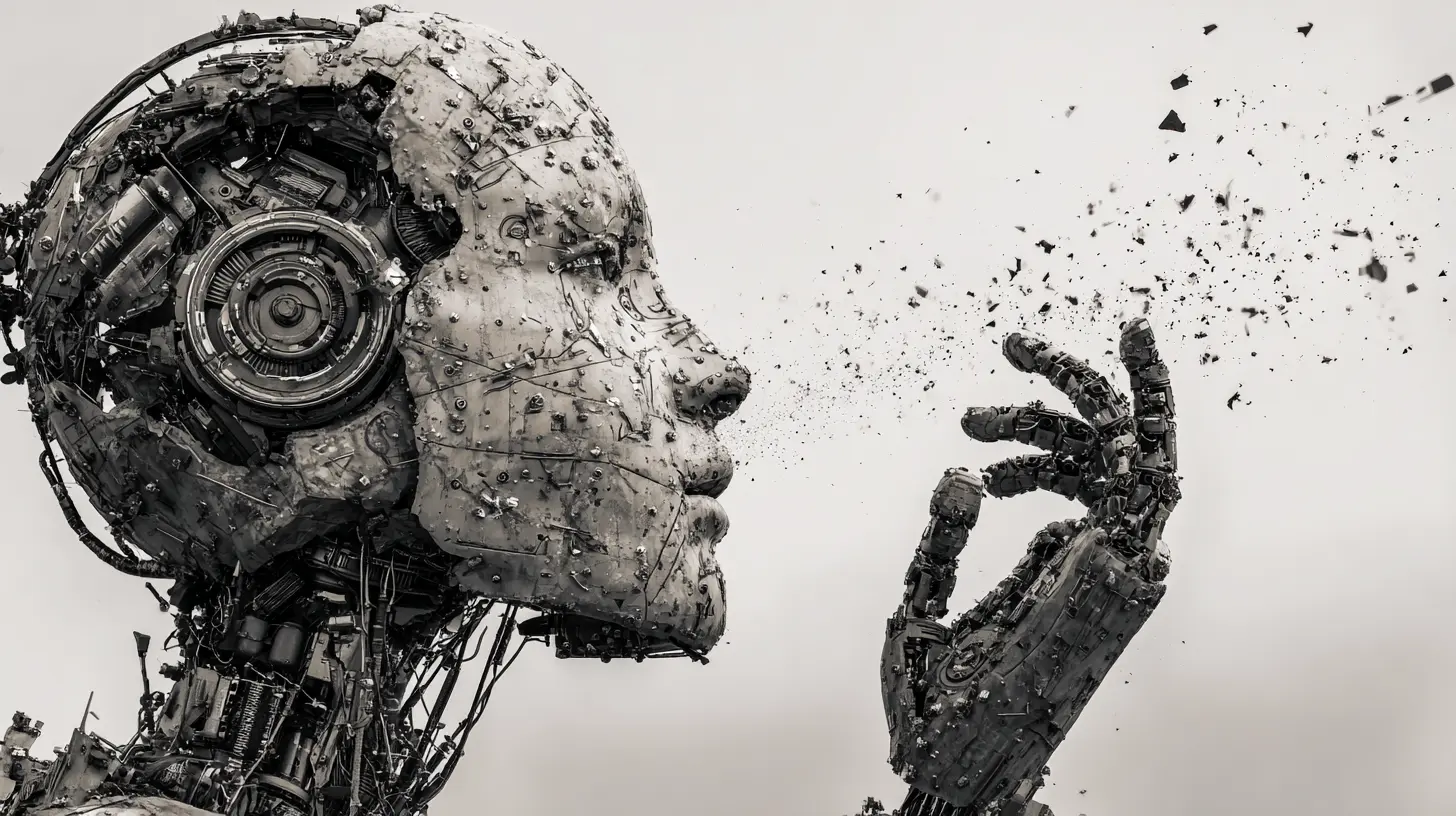
all images in this post were generated using AI tools
Category:
Tech For CreatorsAuthor:

Adeline Taylor
Discussion
rate this article
2 comments
Penelope McGivern
Voice-controlled creative software enhances accessibility and productivity, enabling users to streamline workflows and unleash creativity—transforming how we interact with technology. Exciting future ahead!
April 27, 2026 at 11:29 AM
Adeline Taylor
Thanks for your insight! I completely agree. The future of voice-controlled software is definitely promising and will reshape our creative processes in amazing ways.
Virginia Cook
This article offers an insightful glimpse into the future of voice-controlled creative software. The potential for hands-free innovation is exciting, and it’s fascinating to consider how this technology could empower creators across various fields. I'm eager to see how these advancements will enhance creativity and collaboration by 2026.
April 24, 2026 at 3:27 AM
Adeline Taylor
Thank you for your thoughtful comment! I'm glad you found the potential of voice-controlled software exciting—it's indeed a game changer for creativity and collaboration.