What Deep Learning Means for the Future of Journalism
21 August 2026
Journalism has always been a discipline of triage. Reporters decide what matters, editors decide what gets published, and readers decide what deserves their attention. For over a century, that workflow has remained fundamentally unchanged, even as the tools evolved from typewriters to laptops and from printing presses to content management systems. But deep learning is not just another tool. It is a shift in how information itself is processed, and it is forcing journalism to confront questions that go far beyond automation.
I have spent years working at the intersection of machine intelligence and media production, and I can tell you this: the future of journalism is not about robots writing articles. It is about a fundamental reallocation of human attention. The newsroom of the next decade will not be empty. It will be smaller, more specialized, and more dependent on systems that most journalists do not yet understand.

The Real Problem Deep Learning Solves
The most common misconception is that deep learning is about generating text. Yes, language models can write sentences, and some of them write passable prose. But that is the least interesting application. The real problem journalism faces is not a shortage of words. It is a shortage of context.A typical newsroom receives thousands of documents, press releases, public records, social media posts, and wire stories every day. A human reporter can read maybe fifty of them in a working day, and only a handful with the depth required to find the actual story. Deep learning systems excel at exactly this kind of triage. They can scan, classify, summarize, and flag anomalies across enormous volumes of unstructured data in seconds.
Consider investigative reporting. A team looking into municipal corruption might need to analyze five years of city council meeting minutes, procurement contracts, and campaign finance filings. A human team would take months. A deep learning system can extract entities, relationships, and temporal patterns in a matter of hours. The journalist then does what they have always done: verify, contextualize, and decide what matters.
This is not a hypothetical. Newsrooms like the Associated Press have used automated systems for earnings reports for years. But those are rule-based systems. Deep learning goes further. It can detect subtle patterns that no one explicitly programmed, like a sudden shift in the tone of a company's financial disclosures or a network of shell companies sharing addresses.

How Language Models Change Reporting Workflows
The current generation of large language models has introduced a new dynamic. These systems do not just extract information. They can generate coherent narratives, draft interview questions, translate documents, and even suggest angles that a reporter might not have considered. The key is to treat them as extremely knowledgeable but unreliable assistants.A practical workflow might look like this. A reporter uploads a set of court documents. The model produces a chronological summary, highlights contradictions between testimonies, and generates a list of open questions. The reporter then takes that output and treats it as a starting point, not a final product. They verify every claim against the source documents. They check the model's inferences against legal precedent. They decide which threads are worth pulling.
The danger arises when journalists skip that verification step. I have seen drafts where a model hallucinated a quote, attributed a statement to the wrong person, or invented a statistic that looked perfectly plausible. These systems are not fact-checkers. They are pattern matchers that have learned to produce text that sounds like the data they were trained on. That is a profound difference.
The best practice is to use deep learning for what it is good at: summarization, translation, entity extraction, and anomaly detection. Use it for what it is bad at: final judgment, ethical reasoning, and accountability. A model can tell you what happened according to the data. It cannot tell you whether publishing that information will endanger a source or prejudice a trial.
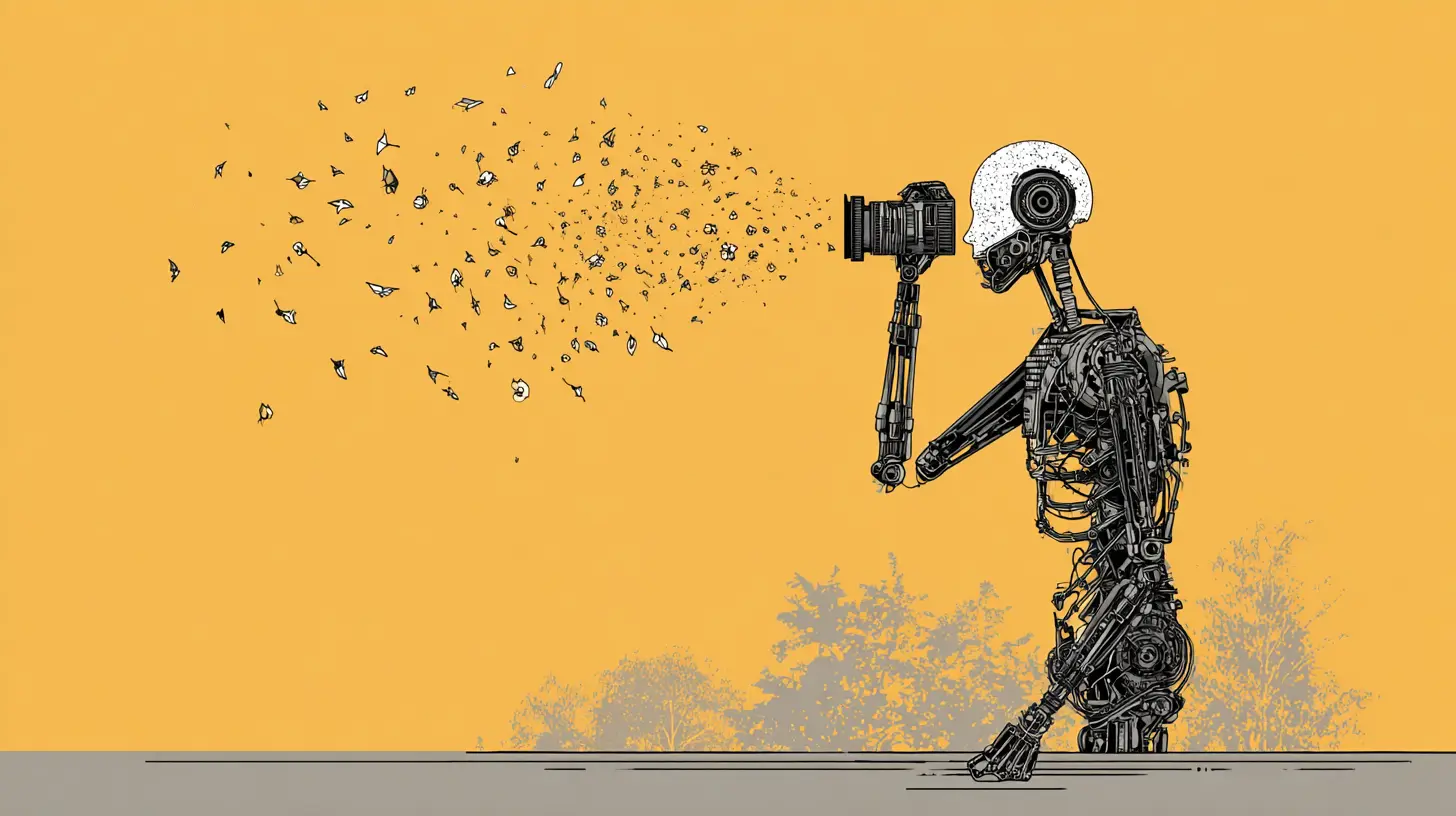
The Shift from Reporting to Curation
One of the most significant changes deep learning brings is the inversion of the reporting pyramid. Traditionally, a journalist goes out, gathers facts, and writes a story that narrows down to a conclusion. With deep learning, the system can generate a vast amount of raw narrative from data, and the journalist's job becomes curating and verifying that output.This is not a downgrade. It is an upgrade in the value of human judgment. The journalist becomes an editor of machine-generated drafts, a verifier of machine-identified patterns, and a decision-maker about what deserves public attention. The skill set shifts from note-taking and transcription to source evaluation and contextual analysis.
For example, a local news outlet covering a school board might use a model to generate draft summaries of every meeting for the past year. The reporter then spot-checks those summaries, adds context from interviews, and writes a piece about a recurring budget discrepancy the model flagged. The model did the heavy lifting of reading. The reporter did the essential work of understanding.
This model works well for routine coverage, but it has limits. Deep learning systems struggle with nuance, irony, and cultural context. A model might not recognize that a public official's carefully worded statement is actually a lie. It might miss the significance of a pause in a testimony or the relationship between two people that is implied but never stated. Journalists must remain alert to these gaps.

The Ethics of Automated Journalism
The ethical considerations are not just about accuracy. They are about accountability. When a human writes a story, there is a clear chain of responsibility. The reporter made choices. The editor approved them. The publisher stands behind the work. When a deep learning system generates a story, who is responsible for the errors?This is not a theoretical question. In 2023, a news outlet published an AI-generated article that contained fabricated information about a public figure. The retraction was swift, but the damage was done. The readers lost trust, not just in that outlet but in the broader idea of automated journalism.
The solution is not to avoid deep learning but to establish clear protocols. Every AI-assisted article should have a human byline. Every system output that is published should be clearly labeled as machine-generated and human-verified. The public deserves to know when they are reading something produced with algorithmic assistance, not because the technology is inherently bad, but because transparency is a core journalistic value.
There is also the question of bias. Deep learning models are trained on historical data, and historical data contains human biases. A model trained on decades of news articles will learn the framing, language, and source preferences of those articles. If the training data overrepresents certain viewpoints or underrepresents certain communities, the model will perpetuate those patterns.
Journalists must actively audit their systems. This means testing outputs across different demographics, checking for language that reinforces stereotypes, and ensuring that the sources the system prioritizes are diverse. This is not a one-time fix. It is an ongoing process that requires vigilance.
Practical Tools and How to Use Them
If you are a journalist or an editor, you do not need to become a machine learning engineer. But you do need to understand the capabilities and limitations of the tools you are using. Here is a practical breakdown.For transcription and interview processing, tools that use automatic speech recognition are now accurate enough for most work. They handle multiple speakers, filter background noise, and produce searchable text. The best practice is to run the transcript through a language model to generate a summary of key points, then listen to the original audio for anything that seems off.
For document analysis, there are commercial platforms that allow you to upload PDFs and ask questions in natural language. These systems can extract dates, names, and amounts from complex contracts. They can compare versions of a document and highlight changes. They can identify inconsistencies in public records. The key is to always cross-reference the model's output with the source document.
For data journalism, deep learning can identify patterns in large datasets that traditional statistical methods might miss. For example, a model might detect that certain neighborhoods are more likely to receive delayed emergency services, or that a company's hiring practices correlate with certain language in job postings. These are not causal findings, but they are leads that a journalist can investigate.
The most important tool is not any single piece of software. It is a workflow that separates generation from verification. Generate with the machine. Verify with the human. Publish with the institution's standards.
The Economic Pressures and Opportunities
The news industry is in a financial crisis. Advertising revenue has collapsed, subscription models are struggling, and consolidation has reduced the number of working journalists. Deep learning offers a way to do more with less, but it also threatens to make some jobs redundant.The honest assessment is that routine reporting tasks, like writing basic crime briefs, covering routine city council meetings, and producing earnings reports, are already being automated. These are not jobs that require deep investigative skills. They are formulaic and data-driven. If a machine can do them reliably, it will.
But this is not a net loss for journalism. It is a reallocation. The journalists who survive and thrive will be the ones who can do what machines cannot: build sources, gain trust, conduct interviews, hold power accountable, and tell stories that resonate on a human level. These are not skills that can be encoded in a neural network.
The economic opportunity is in local news. Many communities have lost their local newspapers entirely. Deep learning can lower the cost of producing basic local coverage, making it economically viable to serve smaller markets. A single journalist with a deep learning assistant could cover a town that previously required a staff of five.
The trade-off is that this coverage will be less rich. It will miss the nuances that come from years of living in a community. It will lack the institutional memory of a seasoned reporter. But it is better than no coverage at all. The choice is not between perfect journalism and automated journalism. It is between some journalism and none.
Common Mistakes and How to Avoid Them
The biggest mistake news organizations make is treating deep learning as a drop-in replacement for human writers. They expect the model to produce publishable articles with minimal oversight. This almost always ends in disaster. The model produces plausible-sounding nonsense, and the organization loses credibility.The second mistake is using deep learning for tasks it is not suited for. Do not use a language model to analyze sentiment in a community forum if you need statistically valid results. Do not use a model to predict election outcomes unless you understand the limitations of the training data. These systems are tools, not oracles.
The third mistake is ignoring the source of the training data. If you are using a model that was trained on internet text, it will contain the biases and errors of the internet. This is not a reason to avoid the technology. It is a reason to be careful about what you ask it to do and how you verify its output.
The fourth mistake is failing to disclose the use of AI. Readers are not stupid. They can tell when an article has a robotic tone or a repetitive structure. If you do not disclose, you will be caught, and the backlash will be worse than the disclosure would have been.
Finally, do not assume that deep learning will solve your business model problems. It will not. It will make your production cheaper, but it will not make your readers pay for content they can get for free. The business model problem is a separate challenge that requires its own solutions.
The Role of the Journalist in the Age of Models
The journalist of the future is not a data scientist. They are a humanist who is comfortable with technology. They understand that their value lies in their judgment, their ethics, and their ability to relate to other humans. The machine can process information, but it cannot care about the consequences of that information.This means that journalism schools need to change their curricula. They need to teach data literacy, algorithmic awareness, and the ethics of automated decision-making. They need to train students to treat models as sources, not as authors. They need to emphasize the importance of verification in an age of deepfakes and synthetic media.
It also means that newsrooms need to change their hiring practices. They need people who can bridge the gap between the technical and the editorial. These are rare individuals, and they will be in high demand. They are the ones who can ask the right questions of a model, interpret its output correctly, and know when to override it.
The Long View
Deep learning is not the end of journalism. It is the beginning of a new kind of journalism, one that is more efficient, more data-driven, and more capable of handling the scale of information that defines the modern world. But it is also a journalism that requires more vigilance, not less.The fundamental values of the profession remain unchanged. Accuracy, fairness, independence, and accountability are not negotiable. The tools change, but the mission does not. The journalist still serves the public, still holds power to account, and still tells the stories that matter.
What deep learning means for the future of journalism is not a replacement of the human but an amplification of the human. It means that a single reporter can do the work of a team. It means that local news can survive in communities that have been left behind. It means that investigative projects that were once impossible due to time and cost are now within reach.
But it also means that the journalist must be smarter, more skeptical, and more ethical than ever before. The machine will produce a thousand plausible narratives. The journalist must find the one that is true.
That is the future. It is not a future of robots. It is a future of humans with better tools, higher standards, and a deeper understanding of what they are doing and why. That is a future worth working toward.
all images in this post were generated using AI tools
Category:
Deep LearningAuthor:

Adeline Taylor
Discussion
rate this article
1 comments
Kestrel Powell
Deep learning is reshaping journalism, opening doors to innovative storytelling and enhanced analysis. Embracing this technology can empower journalists to connect deeper with their audience and uncover untold narratives.
September 8, 2026 at 12:25 PM