Anti-Drone Tech Offers New Front in Cartel Fight
October 9, 2026 - 04:21

The use of unmanned aerial vehicles by drug cartels has shifted from a novelty to a serious operational threat. Criminal organizations now rely on drones for surveillance, smuggling, and even weapon delivery across the southern border. This editorial argues that investing in anti-drone technology is no longer optional for law enforcement and military agencies tasked with disrupting these networks.
Current countermeasures remain scattered. Some agencies use radio frequency jammers, others test net guns or trained birds of prey. None of these approaches scale well against swarms or encrypted signals. A coordinated national strategy would fund research into detection systems that can distinguish hostile drones from commercial traffic, and into interception tools that do not endanger bystanders or disrupt legitimate airspace.
Critics worry about privacy and overreach. Those concerns are valid, but they can be addressed with strict warrants and audit trails. The alternative is a sky increasingly controlled by armed criminal groups. Cartels already use drones to scout patrol routes and drop contraband into prisons. Ignoring the problem will not make it disappear.
Congress should direct the Department of Homeland Security and the Pentagon to fast-track field testing of promising prototypes. State and local police need grant money to buy basic detection gear. The technology exists. What is missing is the political will to deploy it before the next wave of drone-enabled violence arrives.
MORE NEWS

November 10, 2026 - 03:37
Update on Collaboration Between Micromem Technologies and University of TorontoMicromem Technologies has successfully fulfilled its financial obligations outlined in the collaboration agreement with the University of Toronto and Defence Research and Development Canada. This...

November 9, 2026 - 06:05
Transforming Healthcare: The Impact of Constraint-Driven InnovationIn recent years, constraint-driven innovation has emerged as a powerful force in reshaping healthcare delivery worldwide. This approach focuses on overcoming limitations to create impactful medical...
November 8, 2026 - 21:27
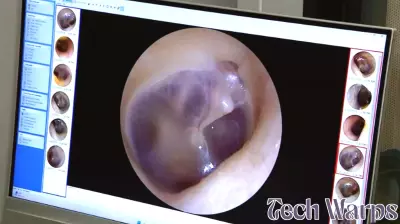
Arizona Hearing Centers Introduce Innovative Technology for Tinnitus TreatmentWith over 50 million Americans dealing with tinnitus, local hearing clinics in Mesa and Scottsdale are stepping up by implementing advanced frequency mapping technology. This innovative approach...

November 8, 2026 - 12:16
Hudson Technologies Faces Fair Value Adjustment After Q3 UpdateHudson Technologies has recently experienced a reduction in its Fair Value estimate, which has dropped to US$5.75 from the previous US$7.31. This adjustment reflects a more cautious outlook from...