AI as Your Co-Creator: Myths and Real Uses
27 November 2026
The phrase "AI as your co-creator" gets thrown around a lot, and it usually means one of two things: a marketing pitch promising that software will replace half your job, or a vague hand-wave about "the future of creativity." Neither is particularly useful if you actually have work to ship. What follows is a grounded look at where AI genuinely functions as a creative partner, where it quietly fails, and how to tell the difference before you build a workflow around it.

What "Co-Creator" Actually Means
A co-creator is not an oracle and not a vending machine. A useful collaborator contributes material you can react to, challenges assumptions, and absorbs some of the mechanical load so you can spend attention on judgment. AI does some of these things well and others poorly, and the pattern is consistent enough to plan around.The core distinction: AI is strong at generating plausible variations and weak at knowing which variation is good. It excels at transforming existing material and struggles at originating intent. It can compress the distance between a rough idea and a workable draft, but it cannot tell you whether the idea was worth pursuing. Treat it as a fast, tireless, slightly overconfident junior collaborator with no memory of yesterday and no stake in the outcome, and most of the practical questions answer themselves.

Myth 1: AI Replaces the Creative Process
The most persistent myth is that you describe what you want and the machine produces it. In practice, the output is only as good as the input, and the input is the hard part. Writing a brief detailed enough to get a genuinely useful result requires you to have already done most of the creative thinking: what the piece is for, who it serves, what tone fits, what to avoid, what "good" looks like.There is also a quality ceiling. AI-generated first drafts tend to be structurally competent and intellectually flat. They hit the expected beats in the expected order. That is fine as scaffolding and dangerous as a final product, because the flatness is easy to miss when you are tired and the draft looks finished.
What actually happens in good workflows is a shift in where effort lives. Less time goes into producing the first 60 percent and more into directing, evaluating, and revising. That is a real change, but it is a change in the shape of the work, not its elimination.
Myth 2: More Automation Means Better Output
Teams often assume that chaining tools together, generating twenty variants, or automating the entire pipeline will compound quality. It usually compounds mediocrity. Generation is cheap, so the bottleneck moves to review, and review does not scale the way generation does. If you produce fifty options and can only seriously evaluate five, you have not gained forty-five options; you have created noise and a selection problem.The practical rule: automate the parts where errors are cheap to catch and expensive to make, and keep humans on the parts where errors are expensive to catch. Formatting, transcription, boilerplate, first-pass summarization, and variant generation are good candidates. Final judgment, factual verification, tone of voice, and anything with legal or reputational exposure are not.

Myth 3: AI Is Either Fully Trustworthy or Useless
Both extremes miss the point. The realistic model is calibrated trust by task. A language model is quite reliable at restructuring a paragraph you wrote, translating between formats, or proposing ten headline options. It is unreliable at citing sources precisely, recalling niche facts, and knowing the limits of its own knowledge. It will state wrong things with the same confident tone as right ones, which is the single most important behavior to internalize.Build your workflow around verification cost. If checking an output takes less time than producing it yourself, the tool is probably worth using. If verification is as hard as creation, you have gained nothing and added a failure mode.
Where AI Genuinely Works as a Co-Creator
Ideation and Divergent Thinking
AI is excellent at volume and variety. Ask for twenty approaches to a problem and you will get twenty, several of which are bad, a few of which are obvious, and occasionally one that reframes the question in a way you had not considered. The value is not in picking the best one; it is in loosening your own fixation on the first idea. Designers use this to escape default patterns, writers use it to break through blank-page paralysis, and product teams use it to stress-test assumptions by asking the model to argue the opposite position.Why it works: language models are trained on a vast range of human expression, so they sample from a broader distribution than any single person's habits. That breadth is the asset. It is also the liability, since the output regresses toward the average of everything the model has seen.
Transformation and Refactoring
The most reliable use case is transforming material that already exists and whose correctness you can verify. Rewriting a technical paragraph for a non-technical audience. Converting meeting notes into a structured summary. Turning a function into a different language or style. Generating test cases from a specification. Producing alt text from an image description. Drafting a changelog from a commit history.In these cases the source of truth is external, the transformation is checkable, and the model's fluency does the heavy lifting. This is where the co-creator framing is most honest: you bring the substance, it brings the speed.
Rubber Ducking and Critique
Asking a model to critique your draft, poke holes in an argument, or list the strongest objections to a proposal is genuinely useful, partly because it has no social incentive to be polite. It will flag missing context, unclear transitions, and unstated assumptions. It will also invent objections that do not apply, so you filter. The exercise of reading its critique often surfaces your own doubts, which is the real benefit.Boilerplate and Glue Work
Code generation for well-defined, low-risk tasks is mature: CRUD endpoints, regex construction, shell one-liners, migration scripts, config files. The same is true for documentation skeletons, email templates, and standard operating procedures. The pattern holds: narrow scope, clear success criteria, cheap verification.
Where It Fails, and Why
Originality and Taste
AI does not have taste. It has statistical patterns of what tends to appear in similar contexts. This means it produces work that is competent and forgettable. If your differentiation depends on a distinctive voice, a novel argument, or a specific aesthetic, the model will sand those edges off unless you fight it constantly. Many writers find that the effort of steering the model toward their voice exceeds the effort of writing from scratch, at least for short pieces.Factual Precision
Models confabulate. They fill gaps with plausible-sounding detail, invent citations, misattribute quotes, and merge entities. This is not a bug that will be patched away; it is a consequence of how next-token prediction works. Any output that will be published, shipped, or acted upon needs independent verification of every factual claim. Budget for that.Long-Horizon Coherence
Ask a model to maintain consistency across a long document, a large codebase, or a multi-week project and the seams show. It forgets constraints, contradicts earlier decisions, and drifts in tone. Retrieval and context management help, but the underlying limitation remains. For long work, keep the model on short leashes: one section at a time, with the full context restated.Judgment Under Ambiguity
When the right answer depends on organizational context, stakeholder politics, or unstated norms, the model has nothing to work with. It will produce a generic answer that sounds reasonable and is wrong for your situation. This is the failure mode that burns teams: the output looks like a decision, so people treat it as one.A Practical Workflow
1. Define the artifact and its success criteria before prompting. What will exist when you are done, and how will you know it is good? If you cannot answer both, the model cannot help you.2. Choose the right mode. Generation for blanks, transformation for existing material, critique for drafts. Mixing modes in one prompt produces mush.
3. Provide real context. Examples of good output, constraints, audience, tone, and what to avoid. Specificity in, specificity out.
4. Generate more than one option, then stop. Two or three variants is usually enough to break fixation. More than that and you are procrastinating.
5. Verify against an external source. Facts, numbers, names, and quotes always. Code always, by running it. Tone and structure by reading aloud.
6. Rewrite in your own hand. For anything published under your name, the final pass should be yours. This is where voice, judgment, and accountability live.
7. Log what worked. Keep a small library of prompts and patterns that produced good results. The compounding gains come from reuse, not from clever one-off prompts.
Common Mistakes
- Outsourcing the brief. Vague prompts produce vague output, and then people blame the tool.- Skipping verification because the output reads well. Fluency is not accuracy; the two are uncorrelated in model output.
- Letting the model set the structure of a complex argument. It will default to the most common structure, which is often the least interesting one.
- Using AI for decisions that require accountability. If a human must answer for the outcome, a human must make the call.
- Ignoring the cost of review. A workflow that generates ten times more drafts but cannot review them is not faster.
- Assuming privacy. Check what your tool does with inputs before pasting anything sensitive.
Trade-offs Worth Naming
Speed versus distinctiveness. The faster you generate, the more you regress toward the average. If differentiation matters, slow down and edit harder.Breadth versus depth. AI gives you many shallow options; experts give you fewer deep ones. Use AI to widen the funnel and humans to narrow it.
Automation versus control. Every step you automate removes a checkpoint. Automate where checkpoints are cheap.
Convenience versus skill. Outsourcing the first draft can atrophy the muscle that generates ideas. Some writers deliberately draft by hand and use AI only for critique, to keep the skill sharp.
Best Practices That Hold Up
- Keep a human in the loop for anything published, shipped, or acted upon.- Treat every model output as a draft from a confident stranger.
- Use AI to transform and critique more than to originate.
- Restate context frequently in long projects.
- Measure the full loop, including review time, not just generation time.
- Write your own final pass for anything carrying your name.
The Bottom Line
AI as a co-creator is real, but narrower than the marketing suggests. It is a strong collaborator for transformation, variation, critique, and glue work, and a weak one for originality, factual precision, long-horizon coherence, and judgment. The teams that get value from it are the ones that design workflows around its actual strengths and budget honestly for its failure modes. The ones that struggle are usually the ones that treated fluency as competence and skipped the review.
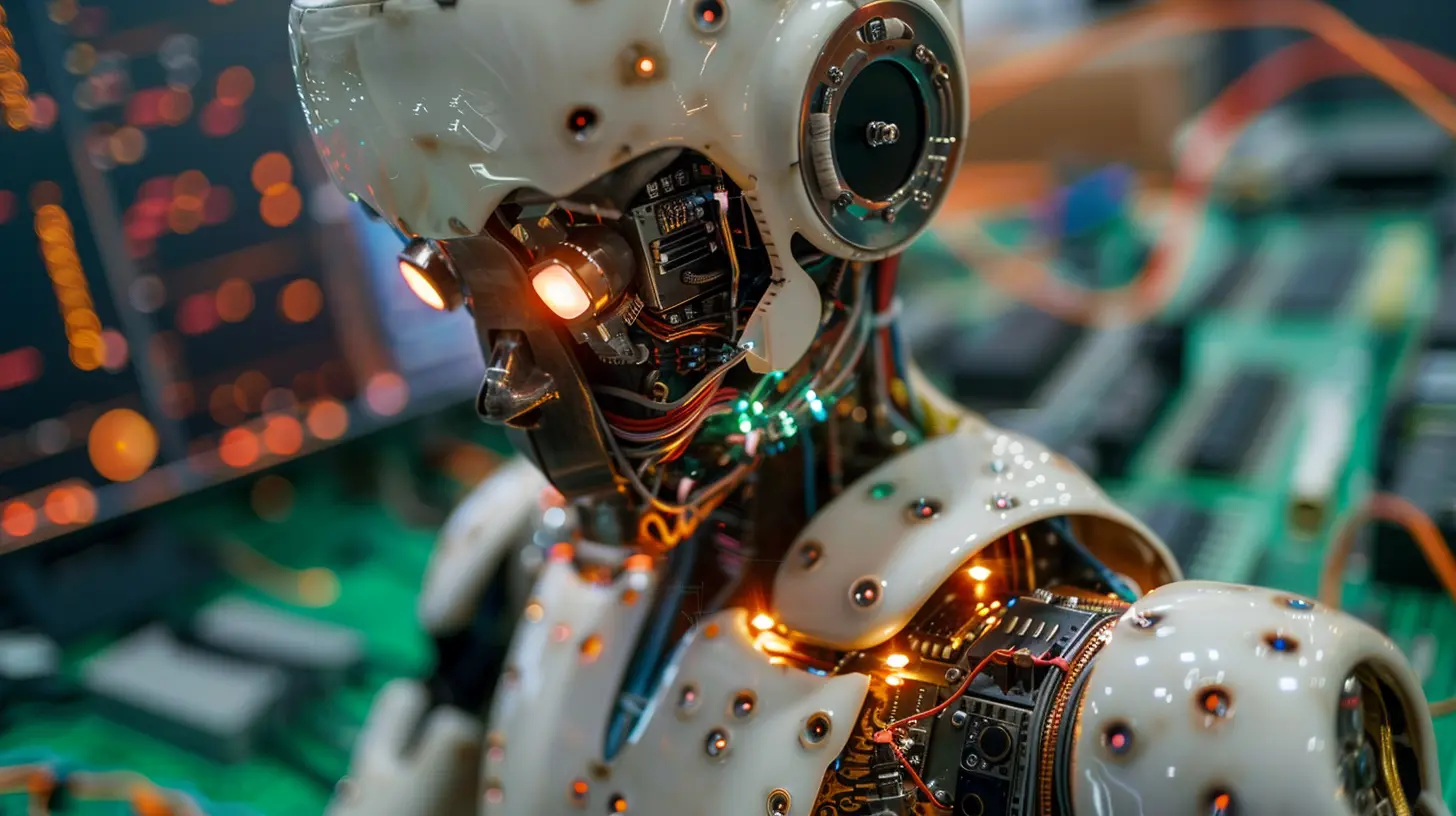
all images in this post were generated using AI tools
Category:
Tech For CreatorsAuthor:

Adeline Taylor