How Digital Twins Can Enhance the Creative Process
2 August 2026
When most people hear "digital twin," they picture industrial machinery, jet engines, or sprawling smart city infrastructure. And that is fair, because that is where the concept first proved its worth. But there is a quieter, more exciting revolution happening in creative fields. Designers, writers, musicians, architects, and even marketing teams are starting to use digital twins not as a replacement for imagination, but as a powerful extension of it.
A digital twin, at its core, is a living virtual model of a physical object, system, or process. It is not just a static 3D render. It is connected to real-world data, updates in real time, and allows you to run simulations that would be too expensive, too risky, or simply impossible to run on the real thing. When you shift that mindset from engineering to creativity, you unlock a completely different way of working. You get the ability to test ideas before they exist, to see how a design behaves under stress, to explore variations without burning materials, and to collaborate with people across the world as if you were all in the same room.
This article is not about replacing your sketchbook or your muse. It is about giving you a sandbox where your ideas can run wild and still be grounded in reality. Let me show you how.
What a Digital Twin Actually Does for a Creative Mind
The first step is to stop thinking of a digital twin as a "copy." A copy is static. A digital twin is alive. It breathes data. It changes based on what is happening around it. For a creative person, that means you are not just looking at a pretty model on a screen. You are looking at a version of your idea that responds to physics, to user behavior, to time, and to constraints.Imagine you are an industrial designer working on a new ergonomic chair. A traditional approach would have you build a physical prototype, test it with a few people, and then go back to the drawing board. That process takes weeks and costs money every time you iterate. With a digital twin, you can model the chair, feed it data about body weight distribution, pressure points, and typical sitting postures, and then run hundreds of simulated tests in a single afternoon. You can see where the stress points are, how the material flexes, and what happens when someone who weighs 120 kilograms sits in it versus someone who weighs 50. You can change the angle of the backrest and instantly see the impact on spinal support.
That is not just efficiency. That is creative freedom. When the cost of trying something new drops to near zero, you are willing to take more risks. You are willing to try the weird idea, the one that would have been too expensive to prototype physically. And sometimes, that weird idea turns out to be the best one.
Why Traditional Creative Iteration Is Holding You Back
Let us be honest about the old way of doing things. The traditional creative loop is: imagine, build, test, fail, adjust, rebuild, retest. That loop works, but it is slow and expensive. Every physical prototype takes time to fabricate. Every test requires setup and measurement. Every failed iteration eats into your budget and your enthusiasm.But the bigger problem is psychological. When you know a prototype costs five thousand dollars and takes two weeks to make, you become conservative. You stop trying bold variations. You start optimizing for "safe" rather than "brilliant." You talk yourself out of the radical change because the cost of being wrong is too high. This is the hidden tax on creativity, and it is everywhere. It is why so many products look similar. It is why so many songs follow the same chord progressions. It is why so many buildings feel interchangeable.
Digital twins remove that tax. They do not remove the need for judgment or taste, but they remove the fear of failure. You can break your digital twin a hundred times before lunch. And each break teaches you something you would never have learned from a successful prototype. In that sense, a digital twin is not just a tool. It is a teacher that lets you fail fast and fail forward.
The Creative Sandbox: Simulating Before You Commit
Think of a digital twin as a sandbox. Not a literal sandbox, but the kind of sandbox that software developers have used for decades. In development, you can spin up a virtual environment, break things, try new code, and roll back to a clean state whenever you want. There is no permanent damage. The same principle applies to creative work.For an architect, a digital twin of a building lets you simulate sunlight at different times of the year, wind patterns around the structure, and even the flow of people through the lobby. You can see how the building looks from across the street at dusk. You can test how a different facade material affects the internal temperature. You can walk through the lobby in virtual reality and notice that the reception desk is too close to the elevator door, causing a bottleneck. None of that requires a single brick to be laid.
For a game designer, a digital twin of a level lets you test player behavior. You can see where players get stuck, where they run too fast, where they miss the hidden clue. You can adjust the spawn points, the lighting, the audio cues, and then run the simulation again. This is not the same as playtesting with real people, which is still essential. But it lets you do the boring, repetitive work of tuning before you waste human testers' time on obvious issues.
For a writer, a digital twin might seem less obvious. But consider a serialized story with a complex world. A digital twin of your fictional universe can track character relationships, timelines, physical locations, and even the consistency of your magic system. You can ask, "If she left the city on Tuesday, could she reach the mountain by Friday?" and the twin will tell you, based on the distances and travel rules you have defined. This is a massive help for long series where continuity errors creep in unnoticed.
Real-Time Feedback and the Death of the Guess
One of the most powerful aspects of a digital twin is its connection to real-time data. In creative fields, this changes how you make decisions. Instead of guessing, you can observe.Take product design again. You have launched a new water bottle. It looks great, but you are getting complaints about the lid being hard to open. With a digital twin, you can pull in customer feedback data, sensor data from smart bottles if they have them, and even social media sentiment. The twin can simulate the lid mechanism under different hand strengths, temperatures, and moisture levels. You can see exactly where the friction is happening and test a fix without recalling any physical products.
In the world of fashion, digital twins are starting to be used for fit and fabric behavior. A designer creates a garment in 3D software. The twin simulates how the fabric drapes, how it stretches, and how it moves when the wearer walks. You can see if the seams pull, if the hem rides up, or if the shoulders bunch. You can test a hundred different fabrics without ordering a single swatch. That is not just faster. It opens the door to more experimental designs because the cost of trying a wild cut or an unusual material is just a few clicks.
The key here is that the feedback loop is not just fast. It is also objective. A digital twin does not have a bad day. It does not get tired. It does not have a personal preference for blue over green. It gives you the same answer every time, based on the data and physics you have programmed into it. That consistency is invaluable when you are trying to separate your emotional attachment to an idea from its actual viability.
Breaking Down Silos: Collaborative Creativity in a Shared Space
Creativity is rarely a solo act. Even the most solitary novelist relies on editors, beta readers, and sometimes researchers. And in fields like architecture, product design, and film, the team can be enormous. The traditional problem with large creative teams is communication. The 3D model says one thing, the engineer interprets it another way, and the client hears something completely different.A digital twin becomes a single source of truth. Everyone works on the same living model. The structural engineer can see the architect's vision and immediately check if the columns will hold. The lighting designer can adjust the fixtures and the architect sees the change in real time. The client can put on a headset and walk through the space, asking questions and giving feedback before a single nail is driven.
This is not just about convenience. It is about the quality of the final product. When everyone sees the same thing, there is less room for misinterpretation. There is less "I thought you meant something else." There is more shared excitement because everyone is looking at the same evolving creation. It also reduces the dreaded "silo effect," where the left hand does not know what the right hand is doing. In a shared digital twin, that is impossible. The data is there for everyone.
One of the best examples I have seen is in film production. Virtual production, popularized by shows like The Mandalorian, uses real-time game engines to create backgrounds that respond to the camera's movement. But that is only part of it. A digital twin of the entire set, including the lighting rigs, the camera positions, and the actors' blocking, allows the director, cinematographer, and VFX supervisor to plan a shot from every angle before the crew even arrives. They can test if a practical explosion will match the digital fire. They can see if the sunset in the background will align with the actor's face. This is not just efficient. It is creatively liberating because the director can try a hundred camera moves without the pressure of a ticking clock on set.
The Trade-Offs: When a Digital Twin Is Not the Answer
I have been singing the praises of digital twins, but I would be doing you a disservice if I did not talk about the trade-offs. They are not a magic wand. There are times when a physical prototype or a simple sketch is the better choice.First, there is the learning curve. Building a good digital twin requires skill. If you are not comfortable with 3D modeling, simulation software, or data analysis, the initial investment of time can be steep. For a quick brainstorming session, a whiteboard and a marker are still faster. The digital twin becomes valuable after you have a concept, not before you have any concept at all. Use low-fidelity tools for the messy, chaotic phase of ideation. Bring in the digital twin when you need to test, refine, and communicate.
Second, there is the risk of over-reliance. If you spend all your time in the simulation, you can lose touch with the physical reality of your craft. A digital twin of a sculpture will never capture the way light plays off the chisel marks in marble. A digital twin of a guitar will never reproduce the smell of the wood or the way it vibrates against your body. For purely aesthetic or tactile experiences, the physical object must remain the final judge. The digital twin can guide you, but it should not be the only voice in the room.
Third, there is the problem of garbage in, garbage out. A digital twin is only as good as the data and assumptions you feed it. If you model a fabric with the wrong stiffness, your simulation will tell you the dress will fit perfectly when it actually pulls at the shoulders. If you forget to include the weight of the glass in your building's facade, your wind load calculation will be wrong. This is not a flaw in the concept. It is a caution about execution. You must validate your digital twin against reality periodically. Otherwise, you are just playing with a very expensive video game.
Common Mistakes and How to Avoid Them
Let me walk you through the mistakes I see most often when teams start using digital twins for creative work.The first mistake is treating the digital twin as a final deliverable. You build a beautiful 3D model and then stop. That is not a twin. That is a static render. A twin must be interactive and data-driven. If you are not updating it with new information and using it to run simulations, you are missing the entire point. Always ask yourself, "What question am I trying to answer with this twin?" If there is no question, you do not need a twin.
The second mistake is ignoring the physical side until the very end. Some teams spend months perfecting the digital model and then realize that the physical prototype does not match. The materials behave differently. The tolerances are off. The connection points do not align. The solution is to build a physical prototype early, even a rough one, and use it to calibrate your digital twin. The twin learns from the physical, and the physical validates the twin. They should evolve together, not in isolation.
The third mistake is using the digital twin to confirm what you already believe. This is a classic bias. You set up the simulation so that it gives you the answer you want. You tweak the parameters until the result looks right. That is not testing. That is self-deception. To avoid this, you must be willing to let the twin prove you wrong. Set up your simulation with neutral assumptions and then see what happens. If the result is surprising, that is a gift. That is the twin doing its job.
A Practical Roadmap for Getting Started
If you are convinced that a digital twin could enhance your creative process, here is a practical way to begin. Do not try to build a massive, all-encompassing twin on day one. Start small.Pick one project that you are actively working on. It could be a product, a building, a game level, or even a marketing campaign. Identify the single most important question you need answered. For example, "Will this chair be comfortable for a wide range of body types?" or "Will this lobby feel crowded during peak hours?"
Next, choose a tool that matches your skill level. If you are a designer, look at simulation plugins for your existing CAD or 3D software. If you are a writer or game designer, look at interactive fiction tools or level editors that allow for state tracking. The tool does not need to be fancy. It needs to be functional and connected to real data.
Then, build the simplest version of the twin that can answer your question. Do not add every detail. Just the essential geometry, the key physics, and the relevant constraints. Run your first simulation. Compare the result to any physical prototype or real-world data you have. Adjust the model until it matches reality. This calibration step is the most important part. A twin that does not match reality is worthless.
Finally, use the twin to run a batch of variations. Change one variable at a time. See how the output changes. This is where the creative magic happens. You are no longer guessing. You are exploring a design space with the ability to see the consequences of every choice. Save the best variations, and then take one of them to the physical world for validation.
The Future of Creative Digital Twins
Looking ahead, the potential is enormous. We are already seeing AI integrate with digital twins, where the twin can suggest design alternatives based on your goals. Imagine telling your twin, "Make this chair more comfortable," and it proposes ten different geometry changes, each backed by simulated pressure data. That is not a replacement for your design sensibility. It is a tireless assistant that has read every ergonomics paper and tested every common sitting posture.We will also see more real-time collaboration across distances. A team in Tokyo, London, and New York can all interact with the same digital twin, leaving notes, making changes, and seeing each other's cursors in a shared virtual space. This will make global creative teams far more cohesive, even if they never meet in person.
And as sensors become cheaper and more ubiquitous, we will see digital twins of living things. A fashion designer could have a digital twin of a specific model's body, updated with her current measurements and even her posture. An architect could have a digital twin of a neighborhood, fed with foot traffic data, weather patterns, and even social media check-ins. The line between the physical and the digital will blur further, and the creative process will be richer for it.
But the core principle will remain the same. A digital twin is not a substitute for imagination. It is a playground for it. It gives you the confidence to try the bold idea, the insight to see the flaw before it becomes a failure, and the shared language to bring others into your vision.
So go ahead. Build your twin. Break it. Learn from it. And then create something you could never have made without it. That is the real promise of this technology, and it is waiting for you to pick up the tools and start playing.
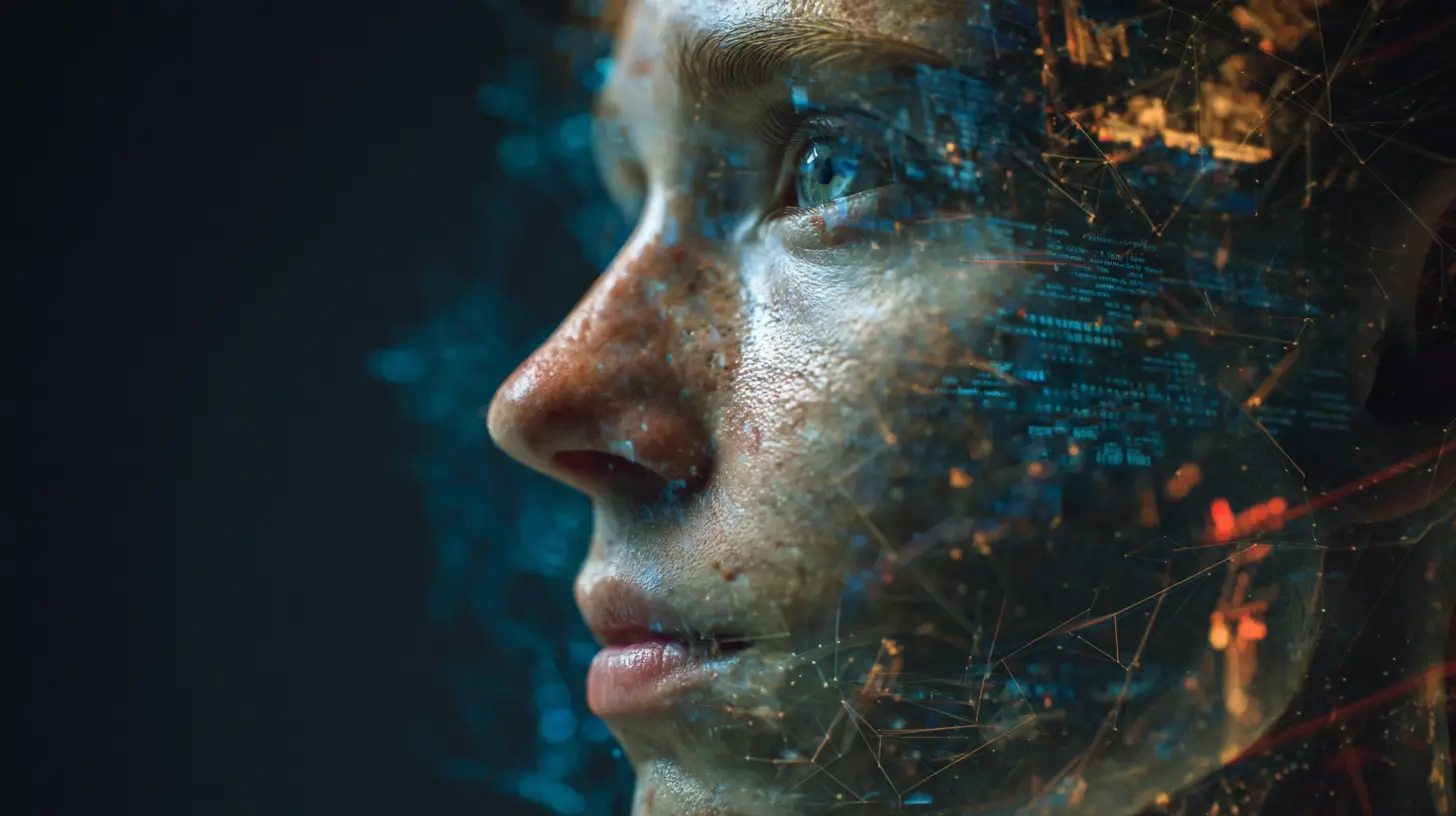
all images in this post were generated using AI tools
Category:
Tech For CreatorsAuthor:

Adeline Taylor
Discussion
rate this article
1 comments
Jaxon Brooks
This article highlights the innovative potential of digital twins in enhancing creativity. By merging technology with artistic vision, we can unlock new avenues for collaboration and inspiration.
August 8, 2026 at 2:59 AM
Adeline Taylor
I'm glad you found the article insightful. Digital twins truly open up exciting possibilities for creativity and collaboration in the arts.