Is Your Wearable Device a Privacy Risk?
27 October 2026
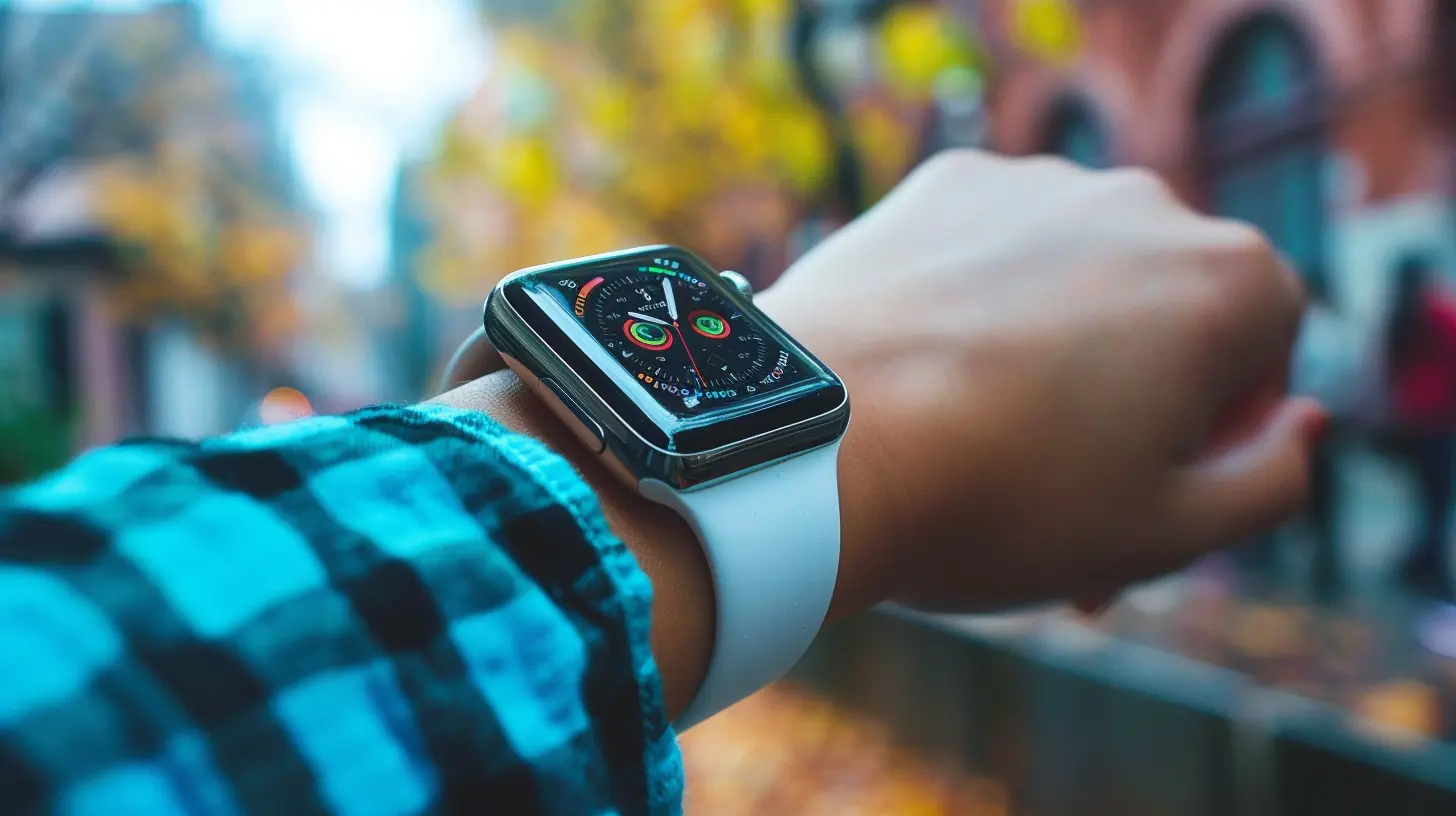
Wearables have quietly become one of the most intimate categories of consumer technology. A smartwatch knows your heart rate at 3 a.m. A fitness ring tracks your sleep stages night after night. Smart glasses can capture video from eye level, and a continuous glucose monitor reveals how your body responds to every meal. These devices sit closer to your body than your phone ever does, and they generate a constant stream of physiological and behavioral data that did not exist in digital form a generation ago.
That intimacy is exactly what makes the privacy question worth taking seriously. The answer to whether your wearable is a privacy risk is not a simple yes or no. It depends on the device, the vendor, the permissions you grant, the jurisdiction you live in, and how much you are willing to trade for convenience. This article breaks down where the real risks live, which ones are overblown, and what you can actually do about the ones that matter.

Why Wearable Data Is Different From Other Data
Most people understand that websites track them and that apps collect data. Wearable data raises the stakes for three structural reasons.First, it is continuous. A phone reveals what you do when you pick it up. A wearable reveals what your body does when you are not paying attention, including while you sleep. Continuous sampling produces a dense, high-resolution record of your life that is difficult to reconstruct from any other source.
Second, it is physiological. Heart rate variability, skin temperature, blood oxygen, movement patterns, and sleep architecture are not opinions or clicks. They are biometric signals. Unlike a password, you cannot change your resting heart rate after it leaks. That permanence matters because biometric data can function as an identifier, not just as a health metric.
Third, it is inferential. Raw sensor data looks innocuous on its own. Combined and analyzed, it supports inferences about stress levels, illness, pregnancy, alcohol consumption, mental health, and daily routines. The risk is rarely the raw number. The risk is what the number implies when aggregated over months and years.
This is why wearable privacy deserves more scrutiny than the average app permission dialog. The data is sensitive by nature, and the value of combining it grows over time.
The Main Risk Categories
Privacy risks from wearables fall into several distinct buckets. Treating them as one lump makes the problem feel unsolvable. Separating them makes it manageable.Data collection by the manufacturer
Most wearables sync to a vendor cloud. That cloud stores your history, and the vendor's terms of service determine what it can do with that history. Some vendors are explicit that they do not sell personal health data. Others reserve broad rights to use de-identified or aggregated data for research, product improvement, or partnerships. The gap between "we do not sell your data" and "we do not share your data in ways that affect you" can be wide. De-identification is also weaker than it sounds. Research has repeatedly shown that supposedly anonymous datasets can be re-identified when combined with other information, especially when the dataset includes fine-grained timestamps and location patterns.Third-party access through integrations
Wearables rarely live alone. They connect to fitness apps, sleep coaching services, insurance wellness programs, and employer health challenges. Each integration is a data-sharing channel. A watch vendor with strong privacy practices can still leak data through a poorly governed partner app that you authorized in thirty seconds and forgot about. The permission you granted to a third-party app often outlives your use of that app.Location and movement tracking
GPS-enabled watches and fitness trackers record routes. Route data is more identifying than people expect. Home and work locations can be inferred from repeated start and end points. A well-known incident involving a fitness tracking heat map illustrated how aggregated activity data can expose military base locations and patrol routes. You do not need to be a soldier for route data to matter. It can reveal where you live, when your house is empty, and which medical facilities you visit.Microphone, camera, and ambient sensing
Smart glasses and some earbuds include cameras and microphones. The privacy risk here is bidirectional. Your device may capture bystanders who never consented, and the device itself may process ambient audio or imagery in ways the wearer does not fully control. Always-on audio assistants raise similar concerns. The question to ask is not only what the vendor does with the data but also what the people around you are exposed to.Security weaknesses in the device itself
A wearable is a small computer with a radio. Bluetooth pairing flaws, weak companion app authentication, and unencrypted local storage have all appeared in real products. The practical risk for most consumers is low, but it is not zero. A compromised account can expose your entire health history, and reused passwords make that worse. Device-level security matters most for people in sensitive roles, but basic hygiene benefits everyone.Inference and re-identification
This is the subtlest category and the one most people miss. Even if a vendor never shares raw data, derived metrics can be revealing. Sleep disruption patterns can correlate with depression. Heart rate anomalies can suggest arrhythmias. Purchasing behavior around a wearable can hint at a diagnosis. The more a platform knows, the more it can infer, and inferences can be used for decisions about insurance, employment, or credit in ways that are not always transparent to you.
What the Real-World Consequences Look Like
Abstract risk is easy to ignore. Concrete scenarios are harder to dismiss.Consider employer wellness programs that distribute wearables or offer discounts for activity data. Participation is often framed as voluntary, but the line between voluntary and pressured can blur when the alternative is a higher insurance premium. Employees may not realize how much granular data the program collects or who inside the company can see it.
Consider auto insurance telematics that pair with wearable or phone data to score driving risk. The appeal is a discount. The trade-off is that your insurer may learn about late-night driving, fatigue patterns, or health conditions that affect your rate. Whether that is acceptable is a personal judgment, but it should be a conscious one.
Consider a domestic abuse situation where a shared account or a partner's access to a fitness app reveals location history. Stalkerware concerns are not hypothetical for many people, and wearables add another surface.
Consider a data breach at a health platform. When records leak, users cannot rotate their heart rhythms the way they rotate passwords. The exposure is permanent.
None of these scenarios means wearables are inherently dangerous. They mean the consequences are asymmetric: the benefit is convenience, and the cost, when it materializes, can be severe and irreversible.
Misconceptions Worth Clearing Up
Several common beliefs about wearable privacy are partially true at best."If I have nothing to hide, I have nothing to worry about." This framing misses the point. Privacy is not about hiding wrongdoing. It is about controlling who can make decisions based on information about your body and behavior. Health data can be used to deny coverage, adjust pricing, or draw conclusions you never consented to.
"Anonymized data is safe." Anonymization reduces risk but does not eliminate it. Datasets with timestamps, locations, and device identifiers are vulnerable to linkage attacks. Treat "anonymized" as a risk reduction, not a guarantee.
"The vendor says it does not sell data, so I am fine." Selling is only one sharing mechanism. Licensing, research partnerships, advertising measurement, and acquisitions all move data between parties without a direct sale. Read the privacy policy for sharing language, not just for the word "sell."
"Deleting the app removes my data." Deleting an app usually stops future collection. It rarely deletes historical data already stored in a vendor cloud. You often need to submit an explicit deletion request, and even then, backups and legal retention requirements may keep copies for a period.
"Wearables are too niche to be targeted." Wearable data is valuable precisely because it is scarce and rich. The market for health and behavior data is real, and the incentives to collect more of it are strong.
How to Evaluate a Wearable Before You Buy
Most privacy decisions happen at purchase, before you ever open a settings menu. A few minutes of research at that stage prevents years of regret.Start with the business model. Ask how the company makes money. A vendor that sells hardware and subscriptions has different incentives than one that monetizes advertising or data partnerships. This is not a purity test. Plenty of ad-supported companies handle health data responsibly. But the business model tells you where the pressure points are.
Read the privacy policy with three specific questions in mind. What data is collected, including derived metrics and location? Who is it shared with, and under what terms? How long is it retained, and how do you delete it? If the policy is vague on any of these, assume the least favorable interpretation.
Check for independent security signals. Look for a published security contact, a bug bounty program, and transparency reports. These are imperfect indicators, but their absence is telling.
Look at the regulatory environment the vendor operates in. Rules differ by region. Europe's GDPR imposes strict requirements on health data and gives users rights to access and deletion. Other jurisdictions vary widely. A vendor's obligations depend on where it operates and where you live, and cross-border data flows can complicate enforcement.
Finally, consider what the device actually needs to function. A running watch needs GPS and heart rate. It does not need your contacts, your calendar, or background access to your microphone. Every permission beyond the core function is a choice the vendor made, and you can judge the vendor by how many of those choices it makes.
Practical Steps to Reduce Your Exposure
You do not have to choose between wearing a device and protecting your privacy. You can do both with deliberate configuration.Audit permissions regularly
Review which apps can access your health data, location, and microphone. Revoke anything you do not actively use. Third-party fitness and sleep apps are the usual culprits because they request broad access by default.Tighten account security
Use a unique password for your wearable account and enable two-factor authentication where available. Your health account is a high-value target because the data inside it cannot be reset. A password manager makes this painless.Limit location history
Disable route recording if you do not need it. If you do need it, review whether your history is public by default. Many fitness platforms have social features that share more than users realize, including maps of recent activities.Use local storage where possible
Some devices and apps support on-device processing or local-only storage. When a vendor offers a setting that keeps data off its servers, understand what you give up. You may lose cross-device sync or advanced analytics. For many people, the trade is worth it.Review third-party integrations
Go through the list of connected apps in your wearable account and remove anything you no longer use. Old integrations are a common leak point because they retain access long after you stop opening the app.Know your deletion rights
Find out how to request deletion of your data and what the vendor's retention policy says. Exercise the right if you leave the platform. Keep a record of the request.Think about the people around you
If you use smart glasses or a camera-equipped device, be mindful of bystanders. Consent norms are still forming, and recording people without their knowledge can damage trust even where it is legal.The Trade-Offs You Cannot Avoid
Privacy is not free, and pretending otherwise leads to bad decisions. Every meaningful protection has a cost.Local-only storage often means losing cloud backup and cross-device sync. If your watch dies, your history may die with it. That is a real loss for people tracking long-term health trends.
Disabling location can degrade features like route mapping, pace analysis, and safety features that share your live location with trusted contacts. For runners and cyclists, live location sharing is a genuine safety tool. Turning it off has consequences beyond privacy.
Avoiding third-party integrations limits the ecosystem. The best sleep analysis or coaching app may require broad access. You have to decide whether the insight is worth the exposure.
Opting out of employer wellness programs may cost you a discount or put you at odds with company culture. The right answer depends on your relationship with your employer and your risk tolerance.
The point is not to maximize privacy at all costs. The point is to make the trade consciously rather than by default.
Where Regulation Is Heading and Why It Matters to You
Governments are paying more attention to wearable data. Health data receives special treatment under several privacy regimes, and regulators have increasingly scrutinized how fitness and wellness platforms handle user information. Enforcement actions and fines have pushed some vendors to tighten defaults and clarify policies.The practical implication for consumers is that your protections depend heavily on where you live and where the vendor operates. If you are in a strong regulatory jurisdiction, you have rights you can exercise. If you are not, the vendor's own policies are your main lever. That asymmetry is a good reason to favor vendors with global privacy commitments rather than jurisdiction-specific minimums.
Regulation also shapes what vendors can infer and how they can use inferences. Rules on automated decision-making and health data are evolving, and the direction of travel is toward more transparency. That is good news, but it will not eliminate the need for individual vigilance.
A Balanced Verdict
So, is your wearable a privacy risk? For most people, the honest answer is: it is a manageable risk that becomes a serious one under specific conditions. The conditions are predictable. You use third-party apps with broad permissions. You leave location history on and public. You reuse passwords. You join wellness programs without reading the terms. You buy from a vendor whose business model depends on data sharing and whose policy is vague.Under those conditions, the risk is real and the consequences can be lasting. Under better conditions, a wearable is a reasonable trade: you give up some data, you get meaningful health insight, and you keep control over the parts that matter most.
The key is to stop treating privacy as a binary. It is a set of choices you make at purchase, at setup, and on an ongoing basis. Make those choices deliberately, revisit them when you add apps or change devices, and you will capture most of the benefit while keeping the downside bounded.
Your wearable is not inherently your enemy. But it is a sensor pointed at your body, connected to a company with its own incentives. Treat it that way, and you will make better decisions than most.
all images in this post were generated using AI tools
Category:
Data PrivacyAuthor:

Adeline Taylor