China’s Block on Meta-Manus Deal Sends a Clear Signal in the Global AI Race
April 29, 2026 - 04:46

When Mark Zuckerberg’s Meta announced its acquisition of Manus, a Singapore-based artificial intelligence startup with deep Chinese roots, many industry observers dismissed it as a routine cross-border tech deal. They clearly do not understand China’s strategic calculus in the escalating AI competition.
China’s regulatory authorities quietly but decisively intervened, blocking the transaction and delivering an unmistakable message: Beijing will not tolerate the transfer of homegrown AI talent, intellectual property, or strategic technologies to American tech giants. The move underscores a broader shift in China’s approach to technology governance, where national security and technological sovereignty now override conventional business logic.
Manus, though incorporated in Singapore, was founded by Chinese entrepreneurs and relied heavily on research talent and data ecosystems originating in China. For Beijing, the deal represented a potential leak of proprietary algorithms and engineering know-how that could accelerate U.S. dominance in generative AI, large language models, and autonomous systems. By blocking the acquisition, China is effectively drawing a red line around its AI supply chain.
The decision also signals that China views the AI race not as a commercial competition but as a geopolitical struggle for technological supremacy. Washington has already imposed export controls on advanced chips and AI software to China. Beijing’s retaliation is now taking shape through tighter scrutiny of outbound investments, technology transfers, and foreign acquisitions involving Chinese-linked entities.
For global investors and tech firms, the message is stark: any deal that touches Chinese AI assets—whether directly or through third-country shells—will face intense regulatory headwinds. The era of frictionless technology flow between the U.S. and China is over. In its place, a new paradigm of digital borders and strategic decoupling is taking hold, with AI at the very center of the conflict.
MORE NEWS

October 21, 2026 - 03:17
Minnesota Tech Leaders Have One Week Left to Sign Up for Minneapolis SummitTechnology executives in Minnesota have one week left to register for the 12th Annual Minneapolis C-Level Technology Leadership Summit. The event, organized by HMG Strategy, is set to bring...

October 20, 2026 - 03:38
Surgical Adhesive Offers Alternative to Traditional StitchesA new medical adhesive developed by researchers with ties to MIT could change how surgeons close wounds and repair tissue. The material, created by a company founded by MIT alumnus Hyunwoo Yuk, is...

October 19, 2026 - 22:49
Transit Technology, Innovation, and Building Trust in Public AgenciesThe evolution of transit technology has changed how public agencies operate, according to ETA founder and CEO John Maglio. In a discussion on the subject, Maglio examined the path that transit...
October 19, 2026 - 04:34
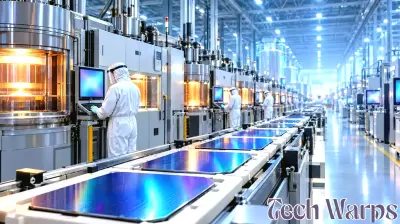
China Tightens Solar Export Rules for 2026, Raising Supply and Price ConcernsChina plans to restrict exports of 12 solar manufacturing technologies starting in 2026, a move that could reshape global supply chains and push panel prices higher. The measures target advanced...